
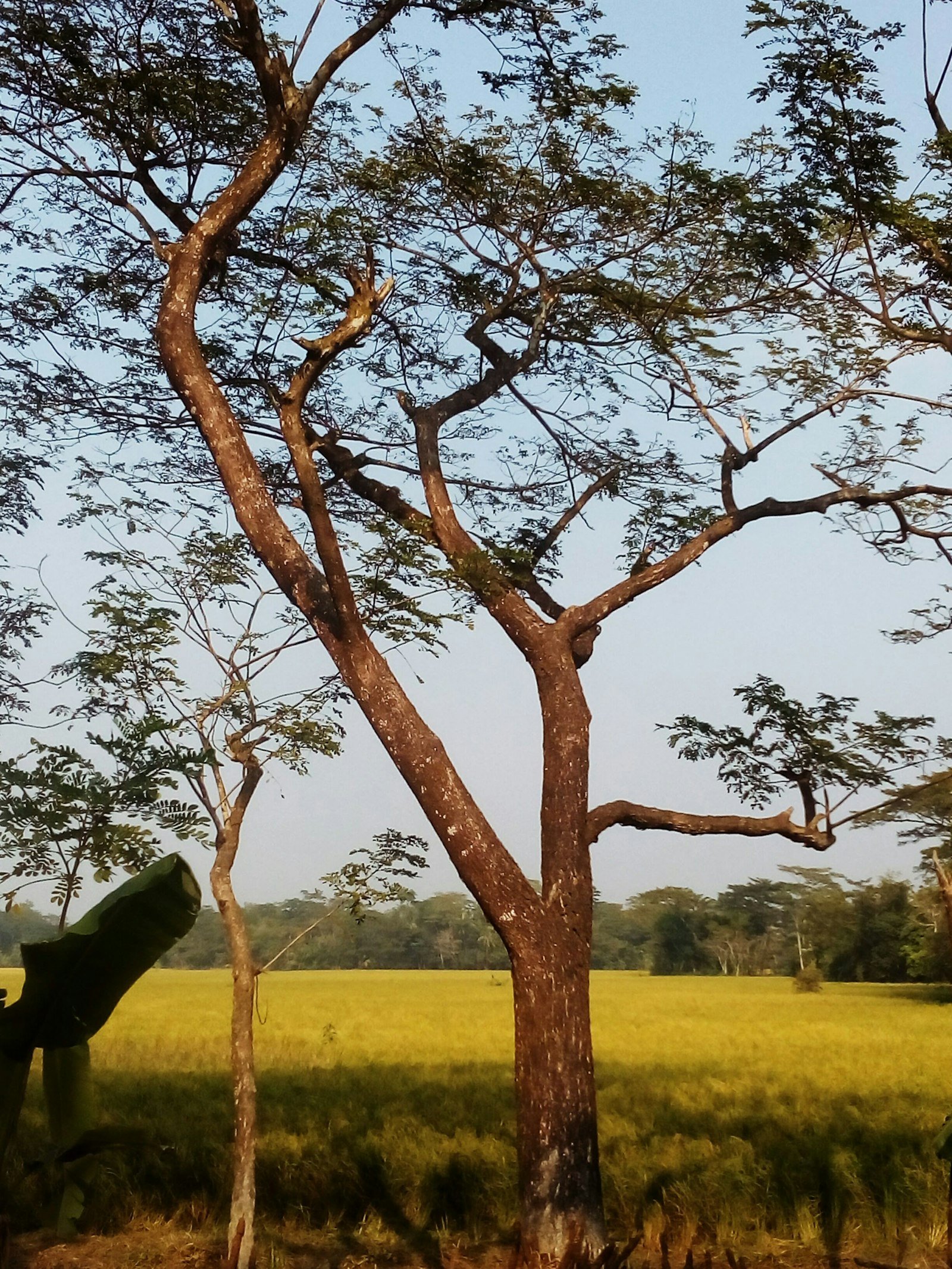
You mow every week, water on schedule and put down fertilizer when you’re supposed to. The front lawn looks great. Then you get to the big oak in the corner, and under it there’s a ring of thin, patchy grass with bare sand showing through.
Sound familiar? It’s one of the most common lawn complaints in Florida, and the usual fixes (more water, more fertilizer, a few pallets of fresh sod) rarely work for long. The reason is simple: the problem isn’t really the grass. It’s the light, the roots and the way the area under the tree is being managed.
Here’s what’s actually going on, and what you can do about it.
The Short Answer
Grass struggles under trees for three main reasons:
- Not enough light. A dense canopy blocks the sunlight grass needs to make food.
- Competition for water and nutrients. Tree roots sit in the same top few inches of soil as grass roots, and they usually win.
- Wrong management. Mowing too short, watering like it’s full sun, and foot traffic all hit shaded grass harder.
Fix the light first, then adjust how you mow and water. If the shade is too heavy, stop fighting it and switch to something that doesn’t need sun.
Start With the Tree, Not the Lawn
More light under the canopy does more for shaded grass than anything you can buy at the garden center. That usually means pruning, and done right, it’s good for the tree too.
Two pruning methods help most:
- Crown thinning. Selectively removing some interior branches so more dappled light reaches the ground, without changing the tree’s overall shape.
- Crown raising. Removing the lowest branches so morning and late-day sun can reach under the canopy.
What you don’t want is topping, where the tops of main branches are cut back to stubs. It might let in light for a season, but it causes weak, fast regrowth that often makes the canopy denser and the tree more likely to drop limbs later. Heavy thinning has the same problem in a milder form, since stripping too much of the interior stresses the tree and can trigger a flush of sprouts.
This is a job for an arborist, not the lawn crew. Large live oaks and laurel oaks need a trained eye to decide which limbs come out and which stay. If you live around Tampa Bay, a crew that prunes mature oaks the right way, like Panorama Tree Care, can thin and raise the canopy so more light reaches the lawn, without weakening the tree before storm season. Elsewhere, our tree trimming cost calculator gives you a ballpark before you call for quotes.
One more thing: even perfect pruning won’t turn deep shade into full sun. If the area gets very little direct light no matter what, skip ahead to the section on alternatives.
Pick a Grass That Can Handle Shade
In Florida, St. Augustinegrass is the best warm-season choice for shade, but some cultivars handle it much better than others. If your lawn is bahiagrass or bermudagrass, the shaded area was probably never going to work. Both love full sun and thin out quickly under trees.
Zoysiagrass and centipedegrass sit in the middle. Both can handle light to moderate shade, and centipedegrass is better suited to North and Central Florida. Seashore paspalum, like bahia and bermuda, is not a good pick for shaded spots.
If you’re resodding under a tree, tell the sod supplier how many hours of direct sun the spot gets. UF/IFAS turf specialists have long pointed homeowners toward shade-tolerant St. Augustinegrass cultivars such as Seville and Delmar for spots with limited sun, but availability and newer options change, so ask what’s performing well locally.
Raise Your Mowing Height
Taller grass has more leaf area to capture what little light reaches it. Mowing shaded grass at the same height as the sunny lawn is one of the most common mistakes.
As a general guide for Florida lawns:
- Standard St. Augustinegrass (such as Floratam): 3.5 to 4 inches
- Dwarf St. Augustinegrass (such as Seville or Delmar): 2 to 2.5 inches
In shade, set your mower to the top of the recommended range for your grass. And stick to the one-third rule: never remove more than a third of the blade in one mowing.
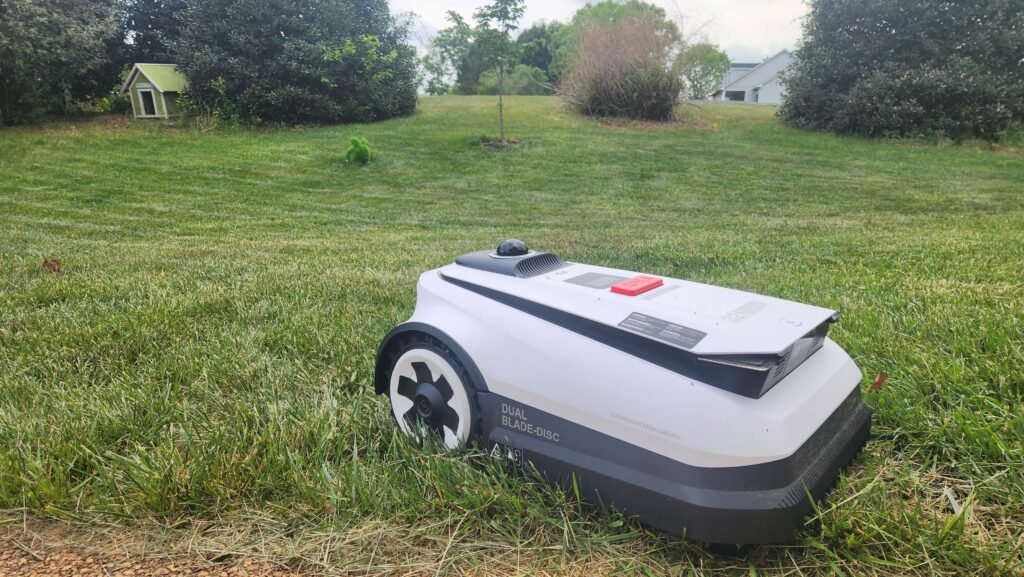
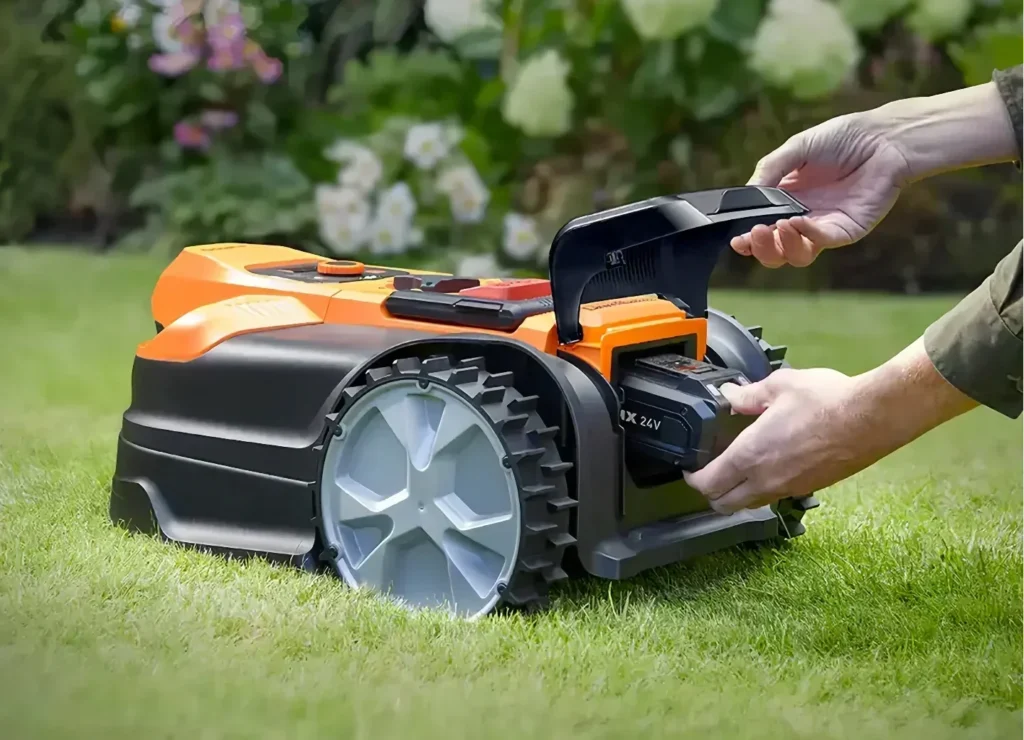
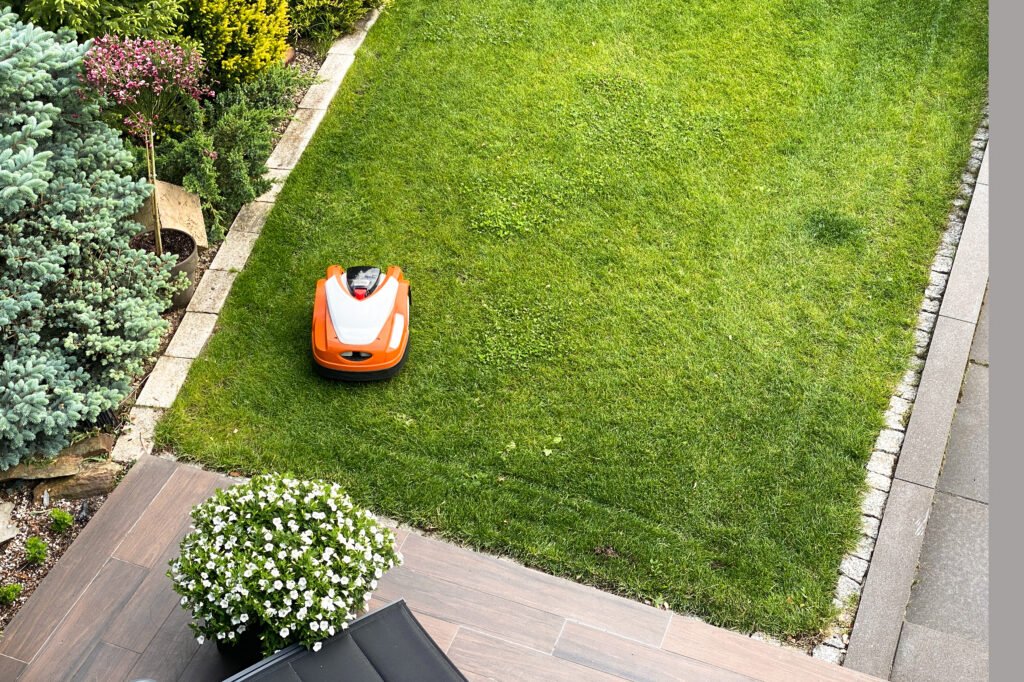
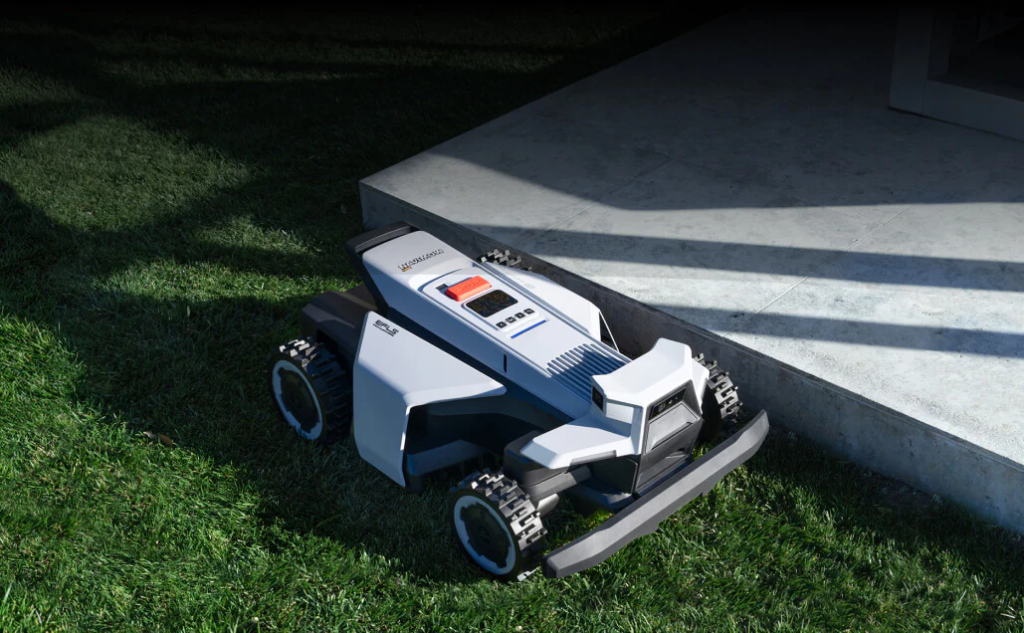
Robot mower owners can do this easily. Most apps let you set a separate cutting height or zone for shaded areas. While you’re in there, consider a no-go zone right around the trunk. Exposed surface roots can damage blades, and repeated hits from any mower can wound the roots and bark at the base of the tree. (Shopping for one? Our Robot Mower Finder matches models to yards with trees, slopes and tight corners.)
Water Shaded Grass Differently
Shaded grass needs less water than grass in full sun. Less sunlight means less evaporation, and the ground under a canopy stays damp longer.
If your irrigation system runs every zone on the same schedule, the shaded area is probably getting too much. That extra moisture, plus higher humidity and less airflow under the tree, creates good conditions for fungal disease.
A few practical changes help:
- Put shaded areas on their own irrigation zone if you can
- Water early in the morning, never in the evening
- Watch for wilting before adding water, rather than watering by the calendar
- Check for disease spots more often than you would in the sunny part of the lawn
Protect the Roots (Theirs and the Grass’s)
Don’t pile soil over tree roots to level out the lawn. It’s tempting when surface roots make mowing bumpy, but even a few inches of fill can cut off oxygen to the roots and slowly harm the tree. The same goes for tilling or digging deeply under the canopy before laying sod. You’ll cut feeder roots and stress the tree.
Instead, lay sod or plugs directly on the existing grade, and accept a few roots showing. If they’re a real problem, an arborist can tell you whether any can be safely managed.
Foot traffic matters too. Grass in the shade recovers from damage slowly, so if a path runs under the tree, give it stepping stones or mulch instead of expecting turf to survive it.
When Grass Just Won’t Grow
Sometimes the right answer is to stop growing grass under the tree. If you’ve thinned the canopy, chosen a shade-tolerant grass and adjusted mowing and watering, and the area still struggles, the shade is simply too heavy.
That’s not a failure. It’s often the better look. Good options include:
- A mulch ring extending out under the canopy. It protects roots, holds moisture and looks clean. (See what it costs with our mulch installation calculator.)
- Shade-loving ground covers suited to your area, planted without heavy digging.
- A small shade bed with ferns or other shade-tolerant plants your local extension office recommends.
University of Florida turfgrass specialists cover species choices, mowing, watering and the point where alternatives make more sense in their guide to growing turfgrass in the shade, which was revised in 2025. It’s worth a read before you spend money on another round of sod.
The Bottom Line
Patchy grass under a tree is a light problem first and a lawn problem second. Get the canopy thinned and raised properly, choose a grass that can take shade, mow it taller and water it less. And if the shade wins anyway, switch to mulch or ground cover and let the tree be the star of that corner.
Keep reading: Growing Grass in Shade: A Professional Gardener’s Success Story