
For a lawn care business, great work is only part of staying busy. Homeowners also need to remember your name when the grass starts growing, when shrubs get out of hand, or when a neighbor asks who maintains the neat yard down the street.
That kind of recognition usually builds slowly. It comes from repeated, positive impressions in the same neighborhoods over time. The good news is that a lawn care company does not need a huge budget to become familiar. Small habits, consistent branding, and thoughtful follow-up can make a local business easier to remember and recommend.
Here are practical ways lawn care professionals can build neighborhood recognition throughout the season without making every interaction feel like a sales pitch.
Make Every Job Site Look Organized
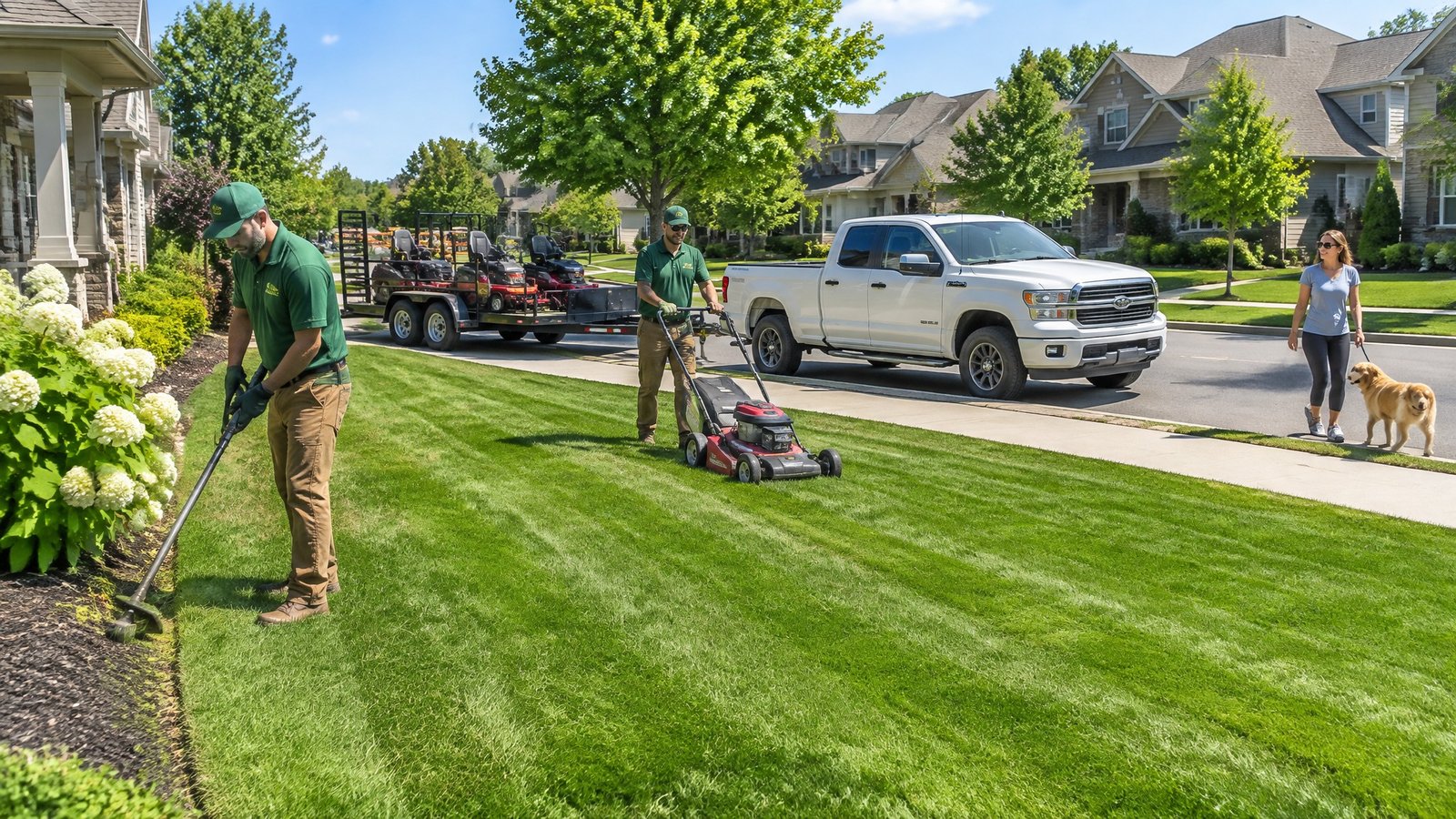
A lawn care crew is often seen by more people than the customer who booked the service. Neighbors walk dogs, drive by, pick up mail, or work from home near the property. A clean, organized job site sends a message before anyone speaks to the crew.
Simple details matter. Park trucks neatly when possible. Keep tools off sidewalks. Avoid blocking driveways longer than necessary. Make sure clippings are cleared from walkways and curbs before leaving.
When a crew looks professional and respectful, nearby homeowners are more likely to notice. They may not call right away, but they start connecting your business name with a clean result and a low-stress experience.
This is especially useful in neighborhoods where homes have similar lot sizes and maintenance needs. One tidy job can lead to another because neighbors can easily picture the same level of service at their own property.
Use Consistent Branding Without Overdoing It
Branding does not have to be loud to be effective. In lawn care, consistency often works better than flashy design. A readable logo, a clear business name, and matching colors across trucks, shirts, invoices, and yard signs can make your company feel familiar.
The key is to make your information easy to recognize at a glance. If a homeowner sees your truck on Monday, your crew shirt on Wednesday, and a yard sign on Friday, those repeated impressions help your name stick.
Small details can help too: yard signs, branded hats, door hangers, refrigerator magnets, and custom pins can all give customers something physical to remember after a job is done.
The goal is not to cover every surface with a logo. It is to create enough repetition that people do not have to search their memory when they need help with mowing, edging, seasonal cleanup, or lawn maintenance. For more ideas, see these small offline branding ideas for lawn care businesses.
Leave Behind Something Useful
A leave-behind item works better when it has a purpose. Homeowners are more likely to keep something that helps them remember service dates, seasonal tasks, or contact information.
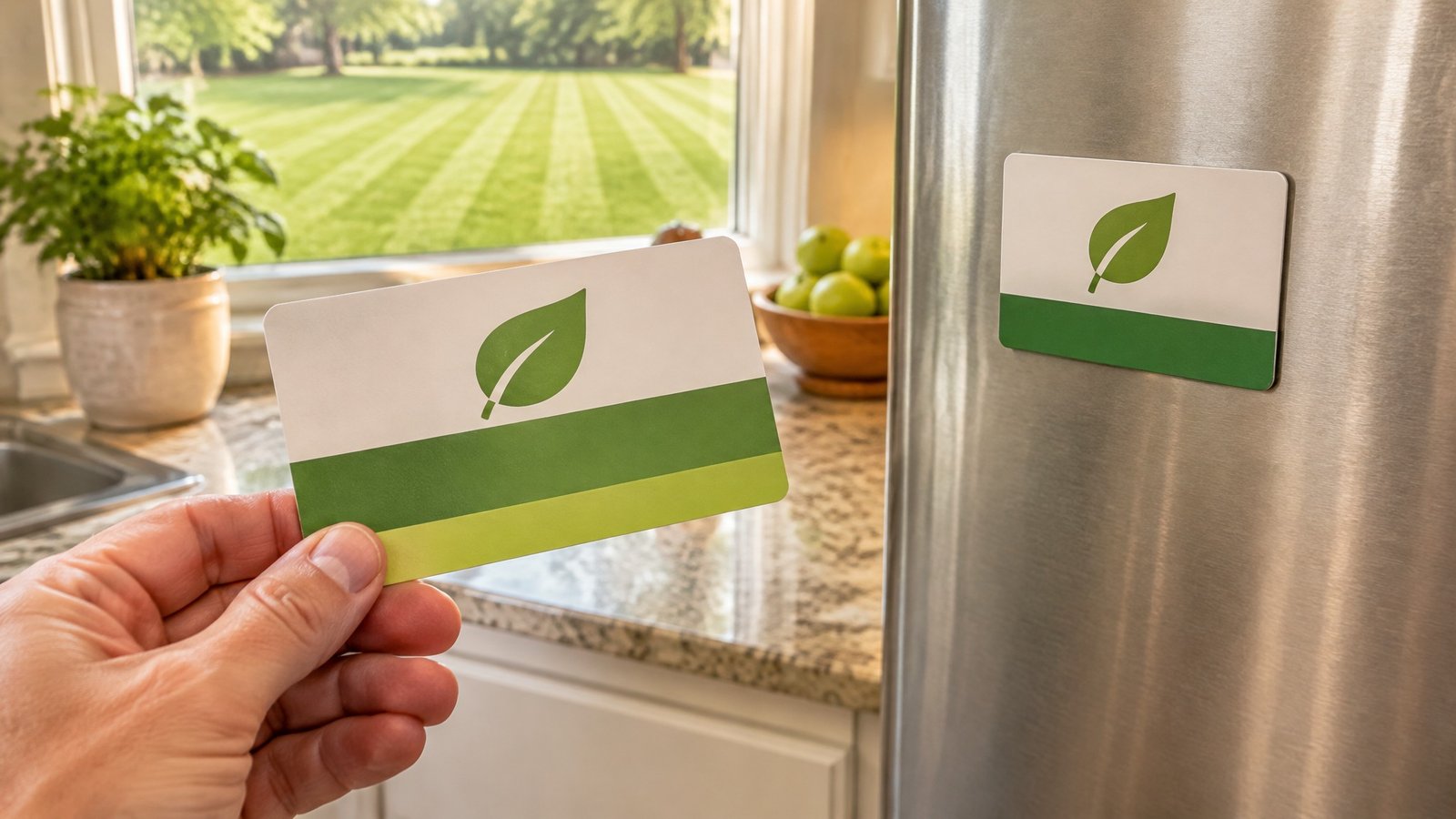
For example, a simple seasonal lawn care card can include reminders such as when to schedule aeration, when to reduce watering, or when to plan leaf cleanup. A small magnet with your phone number and service area can go on a garage fridge. A printed care note after a fertilization visit can explain when pets and kids can return to the lawn.
These items should feel helpful, not pushy. A short note like “Thanks for having us out today. Here are a few care tips for the next week” feels more personal than a generic flyer.
Useful leave-behinds also give customers something to pass along. If a neighbor asks who handled their lawn, the customer may have your information close by instead of needing to search through old messages. (We cover more options in marketing leave-behinds people may actually use.)
Be Easy to Identify and Easy to Contact
Many lawn care leads happen in quick moments. A neighbor may see your crew working and want to ask about pricing. Someone driving by may notice a clean edging job and try to remember the business name later.
Make that process simple. Vehicle lettering should be readable from a reasonable distance. A phone number or website should not be too small. Crew members should know how to respond politely when someone asks for information.
This does not mean every employee needs to be a salesperson. A simple response is enough: “We would be happy to help. The office can give you an estimate, and the number is on the truck.”
You can also keep a few small information cards in each vehicle. These are useful when someone asks about weekly mowing, mulch installation, trimming, or cleanup services. The card should include the business name, contact details, service area, and a brief list of core services.
Build Recognition Through Routine Communication
Customers remember businesses that communicate clearly. This is especially important in lawn care because weather, growth rates, and seasonal changes can affect schedules.
A quick message about a rain delay, a reminder before a seasonal service, or a follow-up after a larger project can reduce confusion and build trust. Over time, customers begin to see the company as dependable, not just available.
Routine communication also creates natural opportunities to stay visible. For example, an email in early spring can remind customers to schedule cleanup before mowing season gets busy. A midsummer note can share watering guidance during dry weeks. An autumn message can explain leaf removal timing and winter preparation.
These updates should be short and useful. Homeowners do not need a long newsletter every week. They need timely information that helps them take care of their property.
Encourage Word of Mouth in a Neighborly Way
Referrals are important in lawn care because neighbors often trust each other more than advertisements. A homeowner who is happy with the way their yard looks may mention your company naturally when someone asks.
You can encourage that without being aggressive. After finishing a job, let customers know you appreciate referrals from neighbors, friends, or family. If you offer a small referral credit, explain it clearly and keep the process simple.
Another practical approach is to focus on clusters of service. If you already maintain several homes in the same area, scheduling them on the same day can make routes more efficient and increase visibility. People tend to notice when the same company is working on multiple properties nearby.
Still, quality has to come first. A referral only works if the original customer feels confident recommending you. Clean work, respectful crews, and reliable scheduling do more for word of mouth than any printed piece alone.
Show Up Locally Outside of Work Hours
Neighborhood recognition can also grow through community involvement. Sponsoring a youth sports team, donating time for a local cleanup day, or participating in a community event can help people connect your business with the area you serve.
These efforts do not need to be complicated. A lawn care company might help freshen up a small public space, provide mulch for a school garden, or volunteer equipment for a neighborhood cleanup. When done sincerely, local involvement shows that the business is part of the community, not just working in it.
The same principle applies online. Sharing simple photos from completed projects, seasonal reminders, or community participation can reinforce what people already see in their neighborhood. Keep the tone practical and grounded. Before-and-after photos, mowing schedule updates, and yard care tips are often more useful than overly polished posts.
Keep the Customer Experience Consistent
Recognition only helps if the experience supports it. If a homeowner remembers your business but also remembers missed appointments or poor cleanup, familiarity will not help.
Consistency is built through systems. Crews should know service expectations. Customers should understand what is included. Billing should be clear. If mistakes happen, they should be addressed quickly and professionally.
A consistent customer experience makes every visible branding effort more effective. When someone sees your truck down the street, they should associate it with reliable work and respectful service.
This is where small businesses often have an advantage. A local lawn care company can be more personal, flexible, and attentive than a larger operation if it has good habits in place.
Conclusion
Neighborhood recognition is not built from one sign, one flyer, or one busy week in spring. It comes from repeated impressions that feel professional, helpful, and consistent.
For lawn care businesses, every job site is a chance to be noticed. Every clear message, clean edge, polite conversation, and useful leave-behind can make the company easier to remember.
When homeowners see the same business doing dependable work throughout the season, trust grows naturally. Over time, that familiarity can turn into repeat customers, neighbor referrals, and a stronger local presence year after year.