
Anyone running a commercial landscaping crew right now knows the job has gotten harder, not easier, over the last few years. Fuel costs bounce around unpredictably, good mower operators are tough to find and even tougher to keep, and clients expect the same tight turnaround times no matter what’s happening with your labor pool. If you’re a property manager juggling multiple sites or a landscaping company owner trying to keep margins healthy, you’ve probably already looked into every trick in the book: better routing, bigger decks, more efficient trailers.
There’s a newer piece of the puzzle that’s worth understanding even if you’re not ready to buy into it yet: autonomous mowing technology. It’s not a gimmick anymore, and it’s not just for homeowners with a small backyard. Commercial-grade robotic mowers are showing up on golf courses, HOA properties, corporate campuses, and municipal parks, and they’re changing how crews plan their days. This article isn’t a sales pitch. It’s a practical look at what’s actually driving the labor and cost pressure in commercial lawn care, what companies are doing about it, and where autonomous equipment realistically fits into that picture.
The Real Challenges Facing Commercial Landscapers Today
Before getting into solutions, it helps to be honest about what’s actually squeezing landscaping businesses right now.
Labor is the biggest bottleneck
Finding reliable mower operators has been a struggle for years, and it’s not getting easier. Seasonal demand means you need to staff up fast in spring and then figure out what to do with that headcount in the off-season. Turnover is high because the work is physically demanding, often outdoors in extreme heat, and entry-level pay hasn’t kept pace with other trades. Every crew lead has a story about training someone for three weeks only to have them quit the day they get a warehouse job offer with air conditioning.
Worker safety carries real weight, and real cost
This part doesn’t get talked about enough. Landscaping and groundskeeping is genuinely one of the more dangerous outdoor occupations in the country. Bureau of Labor Statistics data reviewed by the Department of Labor found 1,072 work-related fatalities in the landscaping and groundskeeping industry between 2011 and 2021, with 234 deaths in 2021 alone exceeding national averages for fatalities, injuries, and illnesses across other industries. Heat is a major factor in that risk. Between 2017 and 2022, OSHA investigated 1,054 heat-related injuries, illnesses, and fatalities, and landscaping was among the industries most frequently associated with fatal outcomes. Beyond heat, crews also face hazards from moving machine parts including mower blades, chemical exposure from fertilizers and pesticides, and being struck by vehicles.
None of this is meant to scare anyone. It’s meant to point out that every hour a crew member spends walking behind a mower in July heat is an hour of real physical risk and real liability exposure for the business. That’s worth factoring into any productivity conversation, not just the labor cost line.
Rising equipment and fuel costs eat into margins
Gas prices fluctuate, but maintenance costs on a fleet of commercial gas mowers are a pretty steady drain. Oil changes, belt replacements, carburetor issues, and downtime while equipment sits in the shop all add up, and they add up faster the bigger your fleet gets.
Client expectations haven’t softened
Properties still need to look sharp on a predictable schedule. A single crew member calling out sick, a mower breaking down mid-route, or a rainy week that pushes everything back a few days can throw off an entire week’s worth of appointments across a portfolio of properties. Consistency also shapes how clients perceive your company overall, from truck appearance to how crews carry themselves on-site, which is worth a look at separately if you haven’t already read our thoughts on looking more professional in the field.
Practical Ways Landscaping Companies Are Improving Productivity
The good news is there’s a lot companies can do that has nothing to do with buying new equipment. These are the fundamentals worth getting right first.
Tighten up route planning
A surprising amount of wasted time in commercial lawn care comes down to inefficient routing, not mowing speed. Grouping properties geographically, scheduling similar-sized jobs back to back, and avoiding unnecessary drive time between sites can free up more labor hours than almost any equipment upgrade. If you haven’t audited your routes in the last year, that’s usually the first place to look.
Cross-train your crew
Operators who can run mowing, trimming, and edging tasks interchangeably give you far more flexibility than a crew where everyone has one job. It also reduces the impact of a single no-show, since someone else can step into that role without the whole schedule falling apart.
Standardize maintenance schedules
Reactive maintenance, meaning you fix equipment after it breaks, is one of the most expensive habits in this industry. A simple weekly or biweekly inspection checklist for blades, belts, and fluids catches small problems before they become an afternoon of downtime during peak season.
Build in heat and safety protocols
Given the OSHA data above, it’s worth having a written heat safety plan for crews, especially for July and August routes. Hydration breaks, shifted start times to avoid peak afternoon heat, and rotating who’s on the most physically demanding tasks all reduce injury risk and, honestly, tend to reduce turnover too. Workers stick around longer at companies that don’t run them into the ground.
Track job costing by property
Knowing exactly how long each property actually takes, not just how long you budgeted for it, lets you spot which accounts are underpriced or which routes are quietly bleeding time. This is unglamorous work but it’s often where the real productivity gains hide.
How Autonomous Mowing Fits Into Today’s Operations
This is where robotic mowing technology comes into the conversation, not as a replacement for everything above, but as another tool that addresses the labor and safety pressures directly. If you want a broader look at what this equipment category covers commercially, our commercial robotic mowing overview is a good starting point.
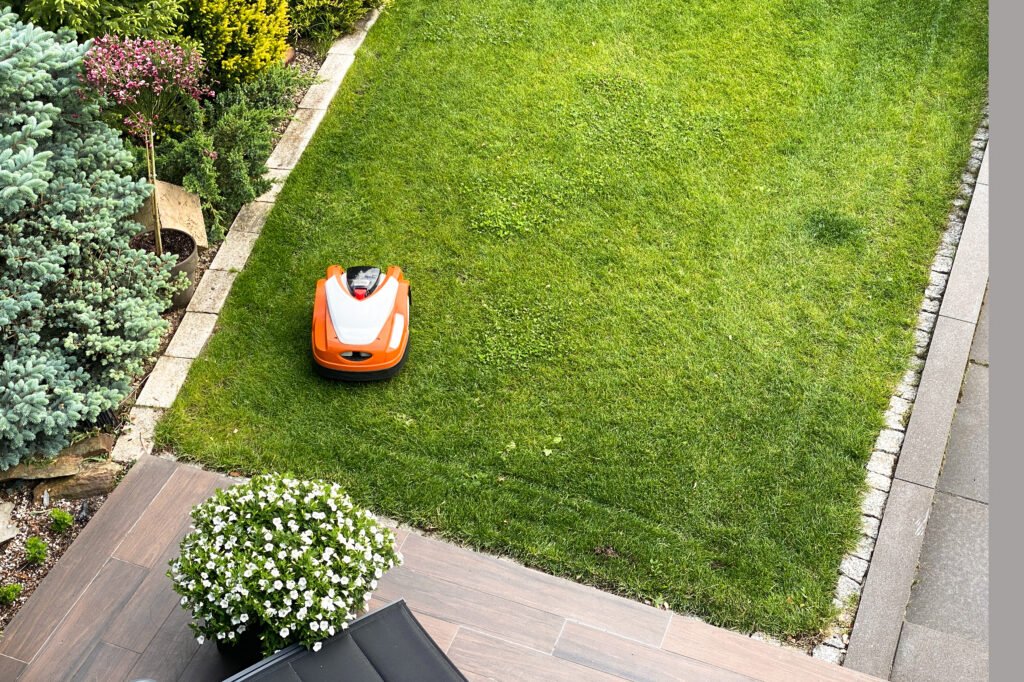
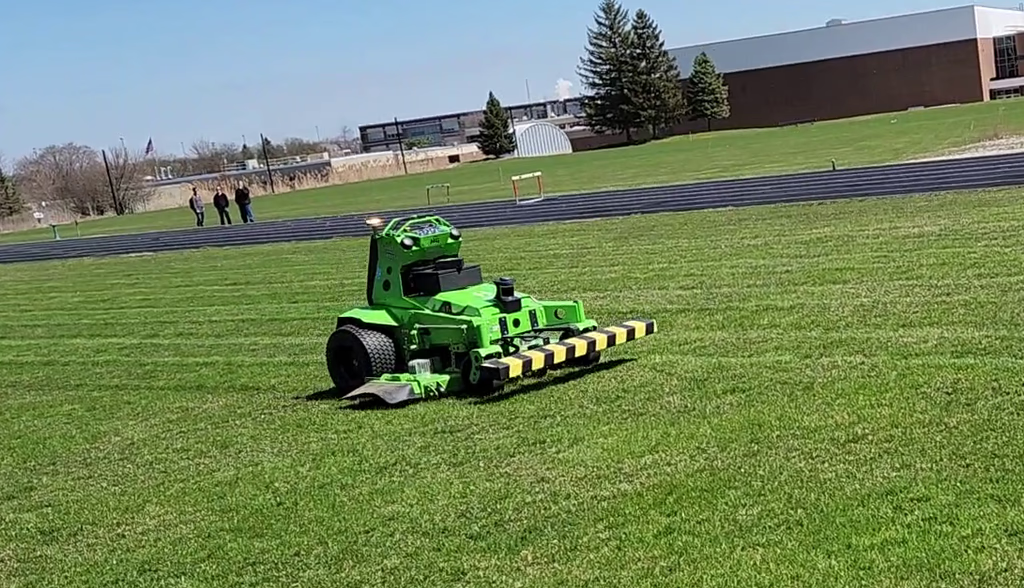
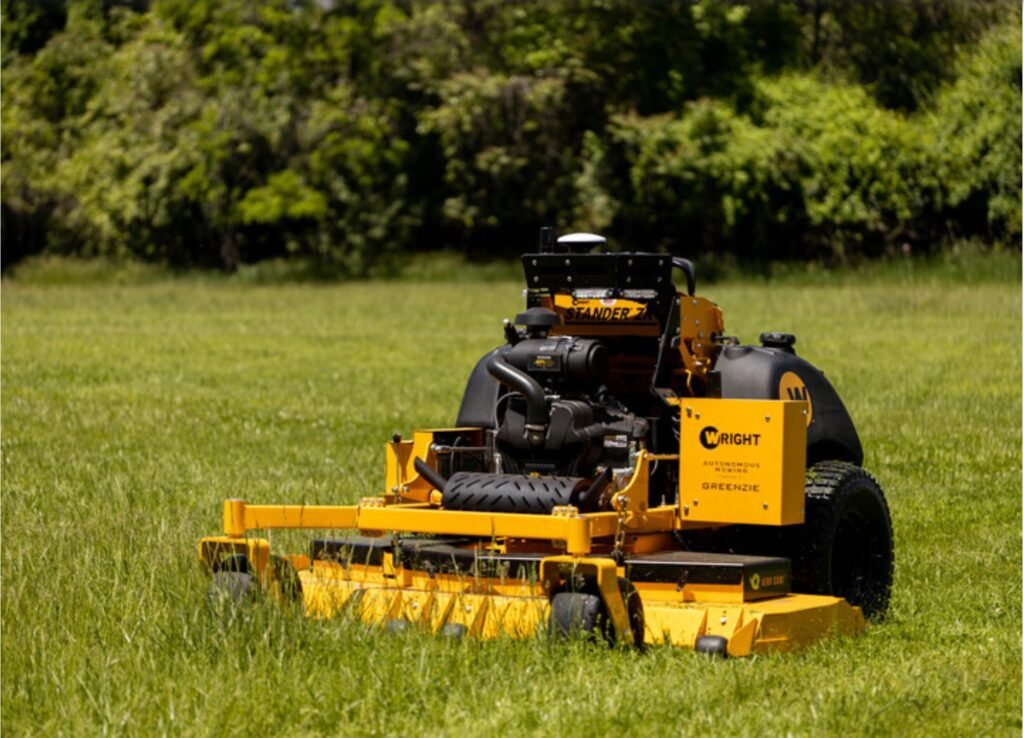
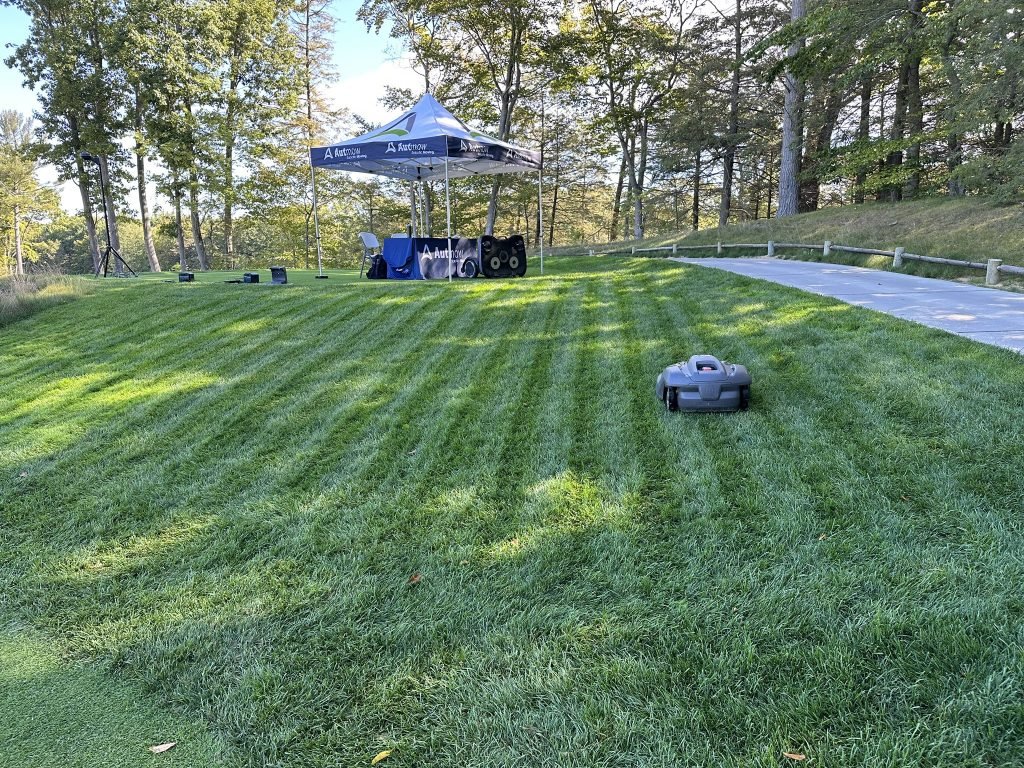
The basic idea behind a modern autonomous commercial mower is straightforward. The machine is mapped to a property boundary using GPS, and once that’s done, it can run a mow cycle on its own using onboard sensors to detect obstacles and avoid them. Current systems typically combine GPS positioning with cameras and other proximity sensors so the mower can stop immediately if a person or animal enters its path. Most commercial-grade units on the market still require an operator to remain on-site with the ability to stop the machine remotely, so this isn’t unsupervised equipment wandering a property unattended. Think of it more as shifting the operator’s role from physically walking behind a mower to overseeing multiple machines at once.
That shift is the actual productivity story. Instead of one person running one mower for a set number of hours, one operator can potentially monitor several autonomous units working different sections of a property simultaneously, while the rest of the crew handles trimming, edging, and cleanup in parallel. On larger properties like corporate campuses, golf courses, or multi-acre HOA common areas, that parallel workflow can meaningfully shorten job times without adding headcount.
There’s also a labor market angle worth considering. If you’re struggling to find and retain mower operators, technology that lets your existing crew cover more ground reduces how much you’re at the mercy of that hiring problem. It doesn’t eliminate the need for skilled people. It changes what those people are doing with their time.
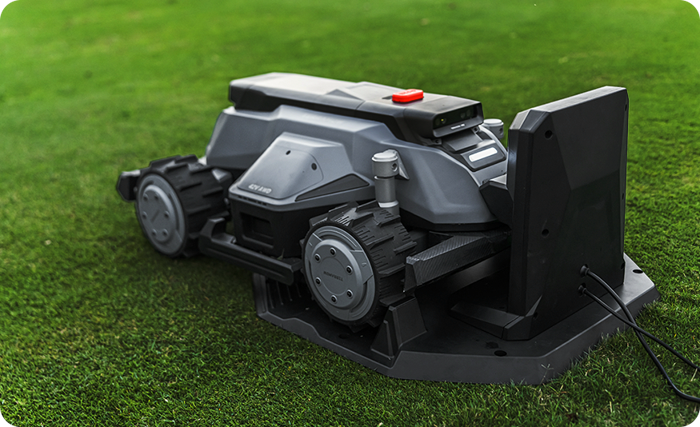
A company like OSO Robotics builds an autonomous commercial mower designed for exactly this kind of scalable crew operation, where obstacle detection and route handling happen automatically while a single operator manages multiple units across a job site. It’s a useful example of where robotic lawn mower technology currently stands for commercial use, not a fully unsupervised solution, but a genuine shift in how labor gets allocated on a mowing crew. If you’re researching commercial robotic mowing solutions for your own fleet, it’s worth looking at how different manufacturers handle safety zones, battery runtime, and fleet tracking, since those details vary quite a bit between products.
Common Misconceptions About Robotic Mowing
There’s a fair amount of confusion about what this technology actually does, so it’s worth clearing a few things up.
“It replaces the crew entirely.” In practice, current commercial systems still require a person on-site during operation, and there’s still plenty of work in trimming, edging, blowing, and general site upkeep that autonomous mowers don’t touch. The realistic outcome is fewer people needed for the mowing task specifically, not an empty job site.
“It can’t handle real commercial-grade grass or terrain.” Early consumer robotic mowers earned a reputation for struggling with thick grass or uneven ground. Commercial units are built differently, with more powerful motors and cutting decks designed for demanding conditions, closer to what you’d expect from professional gas equipment.
“Setup is a huge hassle.” Older robotic mower systems relied on buried boundary wires, which was genuinely a pain to install. Newer GPS-based systems map a property boundary with a walk-through and don’t require wires at all, which makes moving equipment between job sites far more practical for a route-based business.
“It’s only good for small, simple lawns.” This depends entirely on the manufacturer and model, but many commercial systems are specifically built for larger properties with varied terrain, not just flat suburban yards.
Actionable Takeaways
- Audit your routing before you audit your equipment. Inefficient scheduling wastes more labor hours than most people realize.
- Put a written heat safety protocol in place for your crew, particularly for peak summer months. It protects people and reduces turnover.
- Track job costing by property so you know where time is actually going, not just where you budgeted for it to go.
- If labor shortages are a persistent problem for your business, research autonomous mowing as one option among several, and pay attention to how different systems handle supervision requirements, battery life, and obstacle detection.
- Whatever equipment decisions you make, keep OSHA’s landscaping industry safety resources in mind as a baseline for training and hazard prevention.
Conclusion
Commercial lawn care isn’t getting any simpler, but the tools available to run a crew efficiently keep improving. Some of the biggest productivity wins still come from the basics: smarter routing, better maintenance habits, and taking worker safety seriously enough to actually plan around it. Autonomous mowing technology is a newer piece of that toolkit, and it’s not right for every operation yet, but for companies wrestling with labor shortages on larger properties, it’s worth understanding rather than dismissing. The businesses that stay ahead over the next several years will likely be the ones paying attention to both the fundamentals and the newer options as they mature.