

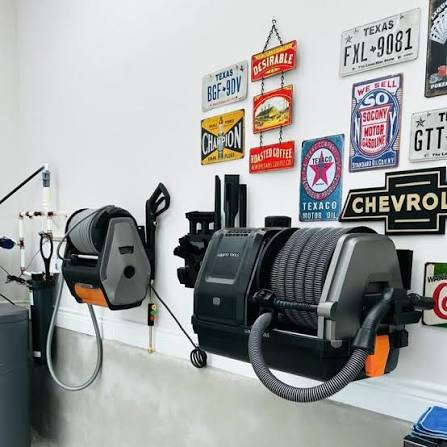
If you’ve ever tripped over a pressure washer hose halfway across the driveway, or spent ten frustrating minutes wrestling a stiff, kinked hose back into a coiled mess before you could even close the garage door, you already understand the appeal of a retractable pressure washer. It’s one of those upgrades that seems minor on paper but changes how often you actually use your equipment — because the easier something is to put away, the more likely you are to pull it out again next weekend.
In this guide, we’ll break down what retractable pressure washers actually are, how they differ from a standard retractable hose reel you bolt onto an existing machine, what to look for before you buy, and how to get the most life out of one once it’s mounted on your wall.
What Is a Retractable Pressure Washer, Exactly?
The term covers two related but distinct products, and it’s worth knowing the difference before you shop.
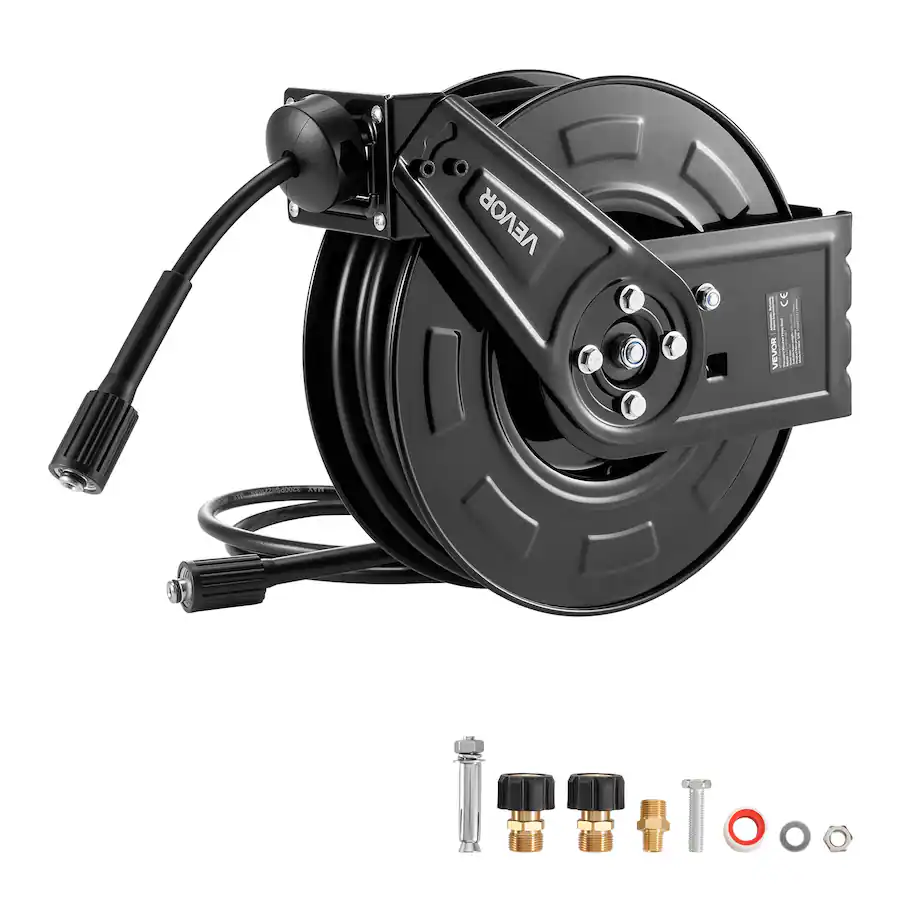
Retractable hose reel attachments are add-on units you mount to a wall, floor, or trailer that store and auto-rewind the pressure hose for an existing pressure washer you already own. These typically use a spring-loaded or hand-crank mechanism, come in hose lengths ranging from around 50 feet up to 150 feet or more, and are rated by PSI capacity (commonly somewhere between 3,000 and 4,500 PSI) to match different washer strengths.
All-in-one retractable pressure washers go a step further: the pump, motor, and reel are built into a single wall-mounted unit, with the hose reeling directly in and out of the housing. Nozzles for different jobs — cars, patios, fences, siding — usually clip onto the same base. These units tend to run in the 2,000–2,500 PSI range with a couple gallons per minute of flow, which is plenty for household cleaning but a notch below dedicated gas-powered washers built for heavy commercial work.
Either way, the core idea is the same: instead of a hose sitting in a heap on your garage floor collecting dirt, grit, and kinks, it lives on a reel that keeps it clean, untangled, and ready in seconds.
Why Bother With a Retractable Setup?
It saves your hose. Loose hoses left coiled on concrete pick up grit that works its way into fittings and abrades the hose wall from the inside every time you pressurize it. A reel keeps the hose off the ground and evenly wound, which meaningfully extends its working life.
It saves your back and your time. Auto-rewind reels pull the hose in with a light tug rather than requiring you to hand-coil 60-plus feet of stiff, water-filled hose. For anyone who pressure-washes a driveway, deck, or fleet of vehicles regularly, that adds up to real time saved over a season.
It reclaims garage space. Wall-mounted units get the whole setup — hose, reel, and sometimes the washer itself — off the floor entirely. For anyone dealing with a one-car garage doing double duty as a workshop, that’s not a small thing.
It protects the equipment from weather and UV. Many reel housings are built with UV-stabilized plastic or powder-coated steel specifically because hoses left in direct sun degrade faster, becoming brittle and crack-prone.
It just gets used more. This is the underrated one. Equipment that’s annoying to set up and put away quietly stops getting used. Equipment that takes thirty seconds to deploy and thirty seconds to stow gets used all the time.
What to Look For Before You Buy
Hose length vs. PSI rating. Longer hoses are convenient, but a longer run of hose at high pressure needs a heavier-gauge construction to avoid pressure loss and premature wear. Match the hose diameter and PSI rating to how you’ll actually use it — a homeowner washing a driveway and a couple of cars doesn’t need a 150-foot commercial-grade reel, while someone servicing a fleet or a larger property might.
Mounting flexibility. Check whether the unit is rated for wall, floor, or trailer mounting, and whether the mounting arm swivels. A reel with a fixed, non-swiveling arm can make hose feed-out awkward if you’re working at an angle to where it’s mounted.
Hot and cold water compatibility. Not all reels are rated for hot water. If you plan to use a hot-water-capable washer (common in more serious cleaning or degreasing tasks), confirm the reel and hose are rated for it — using a cold-water-only hose with hot water is a fast way to shorten its lifespan or cause a failure.
Fitting standard. Most consumer units use an M22-14mm fitting, which is the de facto standard for residential pressure washers, but it’s worth double-checking compatibility with your specific washer before buying, especially if you’re retrofitting a reel onto a machine you already own.
Build material. Heat-treated steel with a powder coat or brass fittings tend to hold up best against rust and daily wear, particularly if the unit will live outdoors or in an unheated garage through winter.
Auto-rewind vs. hand crank. Auto-rewind (spring-loaded) reels are more convenient day to day, but hand-crank models are often more affordable and, in some cases, more durable over the long run since there’s less spring mechanism to eventually wear out. If you’re using the washer daily, the convenience of auto-rewind is usually worth the price difference. If it’s a once-a-month tool, a hand crank is a perfectly reasonable way to save some money.
Installation Tips
Most retractable units are designed for a straightforward DIY install, but a few things make the difference between a setup that works well for years and one that becomes a minor headache:
- Mount at a height that lets the hose feed out at a natural angle — too low and you’ll be fighting gravity and floor clutter; too high and the guide arm has to do more work to keep the hose from rubbing against the housing edge.
- Anchor into a stud or solid masonry, not just drywall. A full reel of hose is heavier than it looks, and the torque from pulling out 60+ feet repeatedly will loosen a weak mount over time.
- Leave slack room for the swivel arm to move through its full range without hitting a shelf, workbench, or door frame.
- Route the water supply line so it isn’t kinked or pinched behind the mounted unit — a surprisingly common install mistake that quietly reduces flow and pressure.
Maintenance That Actually Matters
Retractable units are low-maintenance by design, but a little seasonal care goes a long way:
- Drain the hose before winter storage if you’re in a freeze-prone climate — trapped water expanding in the hose or reel housing is one of the most common causes of failure.
- Wipe down the hose periodically to keep grit from grinding into the reel’s internal mechanism as it rewinds.
- Check fittings for wear every few months, since these take more repeated stress than almost any other part of the system.
- Keep the reel spring mechanism (on auto-rewind models) free of debris, since a jammed spring is the most common reason these units eventually need repair.
Is It Worth the Upgrade?
For anyone using a pressure washer more than a handful of times a year, a retractable setup tends to pay for itself in convenience alone, and it usually adds real years to the life of the hose itself. If you’re a once-a-summer user with a small driveway, a basic hose reel cart might do the job just fine. But if pressure washing is part of a regular routine — driveways, siding, decks, vehicles, equipment — mounting a retractable unit is one of the simpler upgrades that makes the whole job less of a chore, which, in the end, is usually the difference between a tool that gets used and one that gathers dust in the corner of the garage.