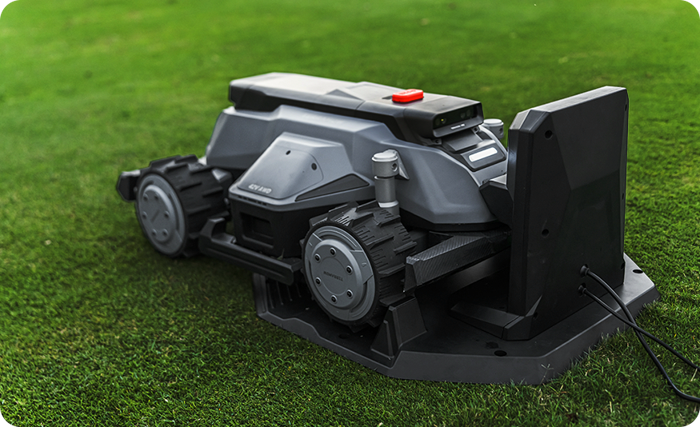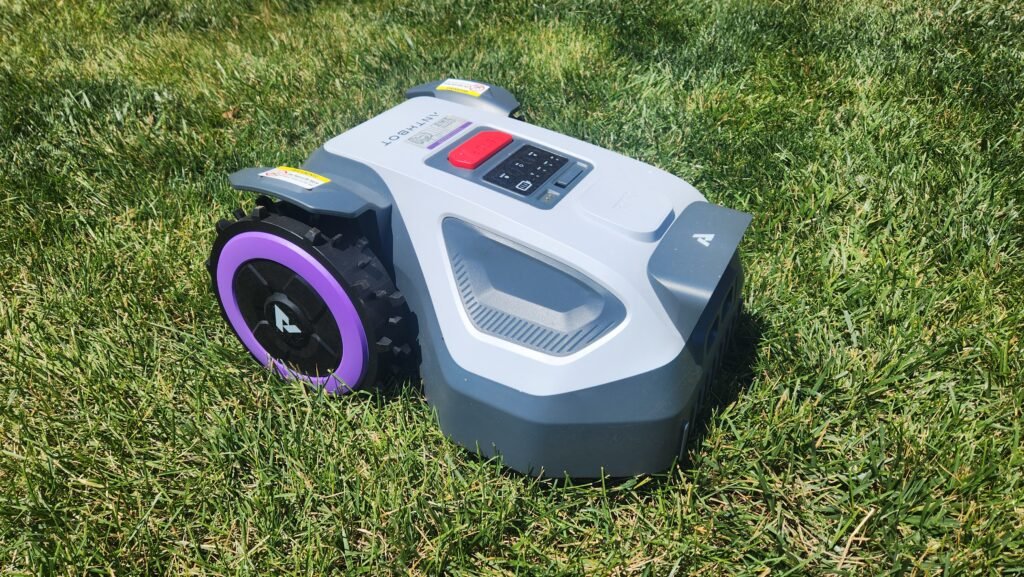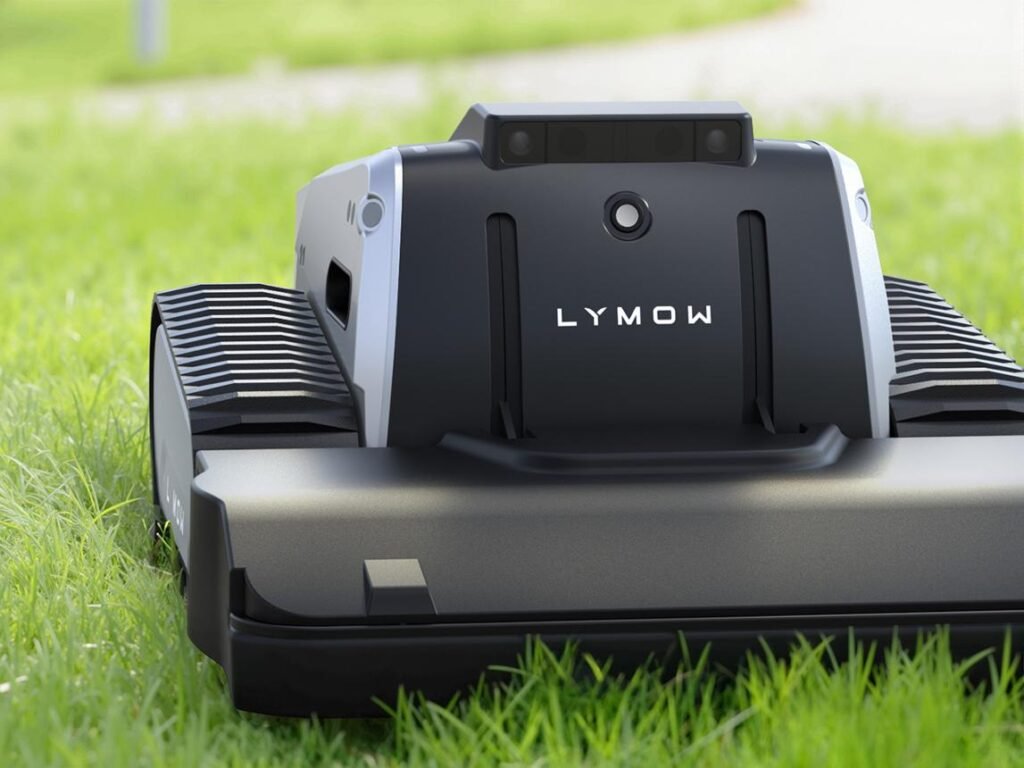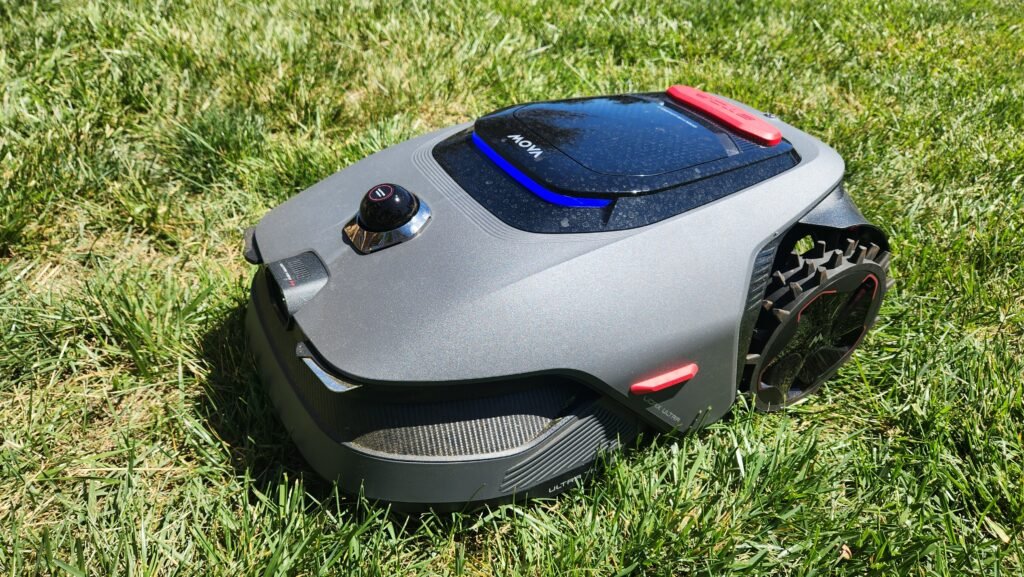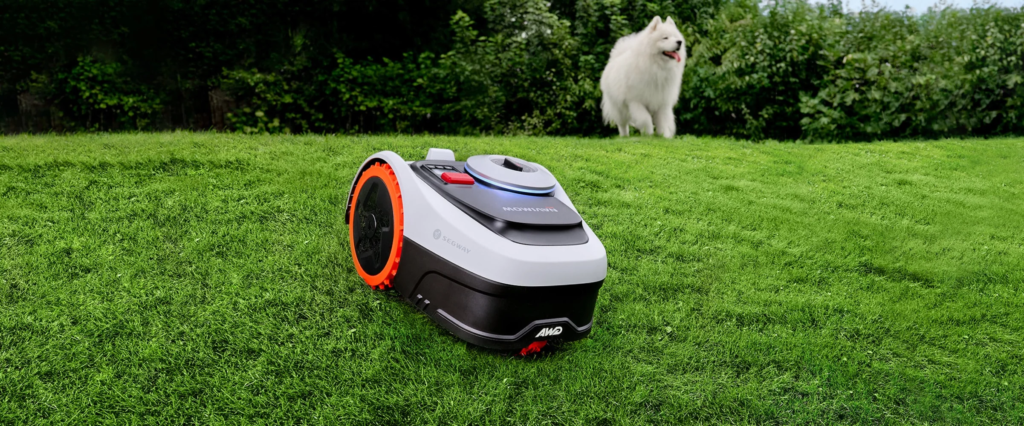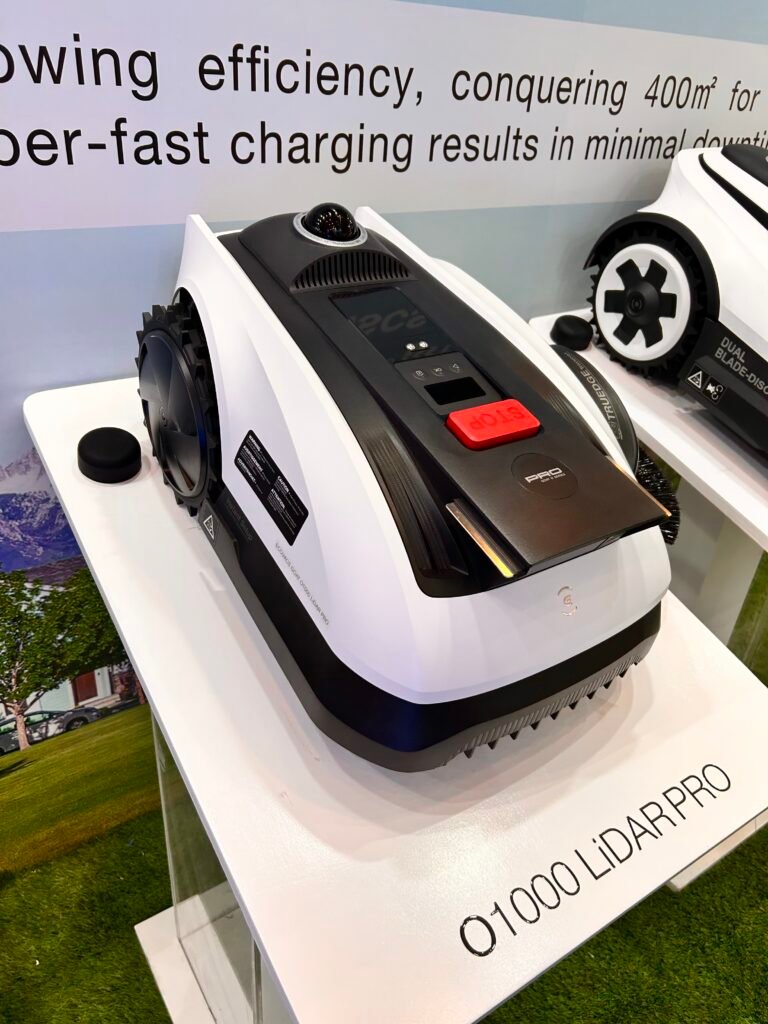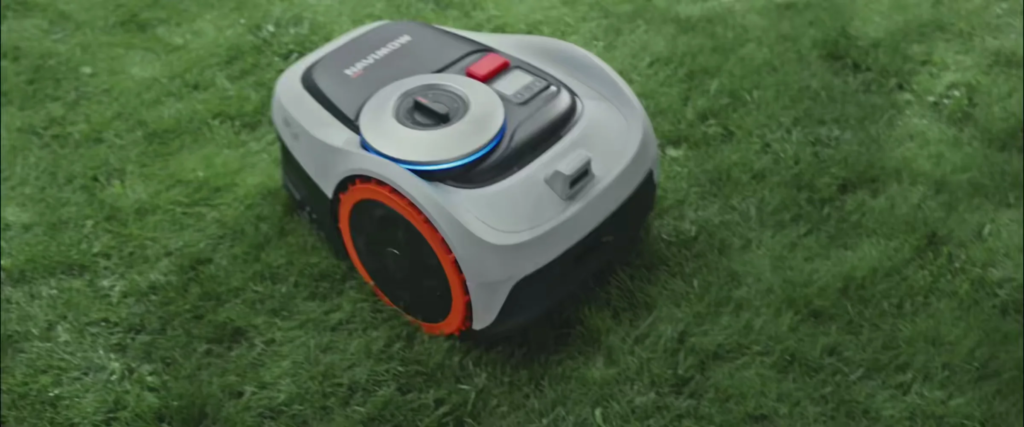

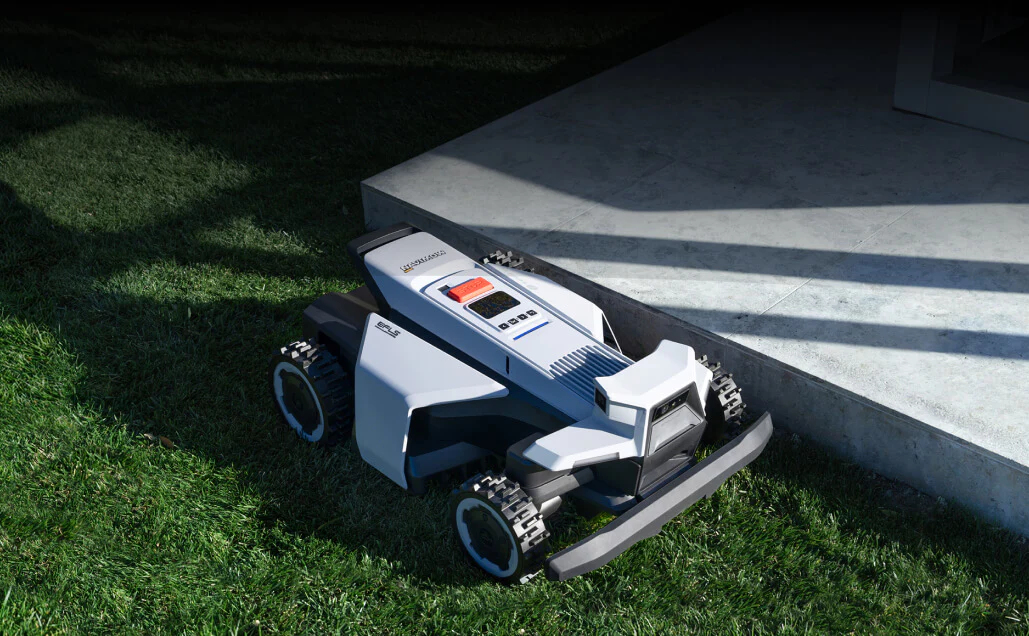
For years, robot mowers occupied an awkward middle ground — alluring in a tech-demo context, frustrating in practice. Buried perimeter wires that needed re-laying every spring. Mowers beached on a pinecone. Turf-scarring skid-steer turns that left mud tracks where beautiful grass used to be. The promise of truly autonomous lawn care has always felt like it was one generation away.
The Segway Navimow X4 Series, launched in February 2026, may be that generation. With serious all-wheel drive, a patented turf-safe turning system, wire-free RTK navigation accurate to the centimeter, and AI-powered 360° obstacle detection, the X4 is the most technically complete robot mower we’ve seen at this price point. But “most complete” doesn’t always mean “right for you.” This review covers everything — specs, performance, competitors, and the honest cases where you should look elsewhere.
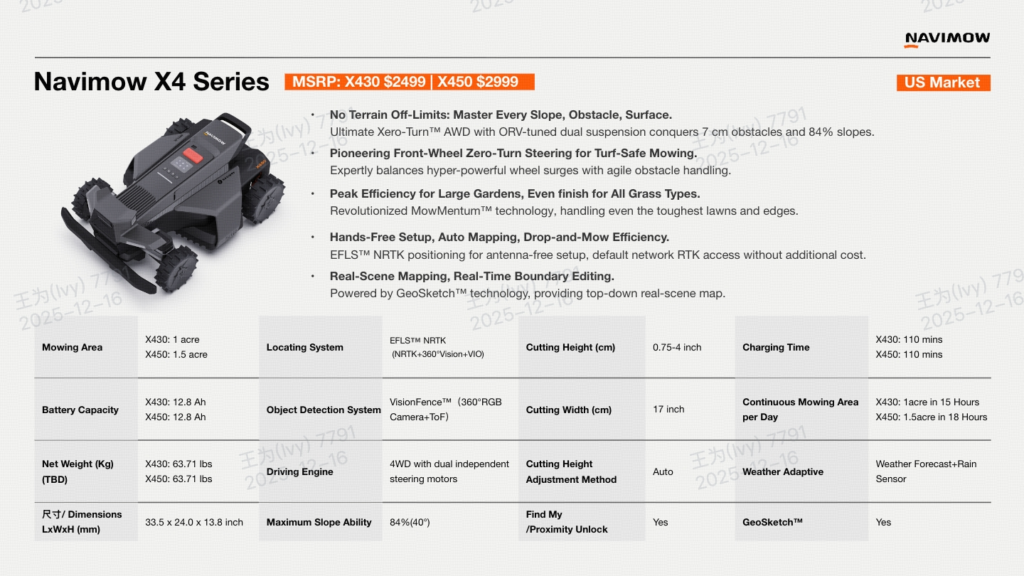
Quick Specs: X430 & X450
Models X430 (1 acre) / X450 (1.5 acres)
Starting Price $2,499 (X430)
Drive SystemTrue AWD, all 4 wheels powered
Slope Rating 84% / 40°
Cutting Width17 inches (dual-disc, 12 blades)
Cutting Height 0.75″ – 4″ (8-layer adaptive)
Motor Power2 × 180W cutting motors
Navigation NRTK + 360° VSLAM + VIO
Battery / Charge Time12.8Ah / 90 min (224W fast charge)
Mow Time / Charge~110 minutes
Max Speed 2.6 ft/s
Obstacle Clearance2.8″ vertical (5.9″ gentle slopes)
Body Width 24 inches
Water ResistanceIPX6
Connectivity WiFi, 4G (3-yr SIM included)
Voice ControlAmazon Alexa & Google HomeThe X430 vs X450 Choice
Two Models, One Platform
The X4 series is a two-model lineup. The X430 handles lawns up to 1 acre and starts at $2,499. The X450 extends coverage to 1.5 acres at a higher price point. Both share identical hardware — the same AWD system, the same cutting deck, the same navigation stack — and both claim to finish their maximum lawn area in a single day, which is a genuinely bold statement for the category.
That claim is backed by math: a 12.8Ah battery gives you 110 minutes of runtime per charge, and with 224W fast charging, the unit is back to full in 90 minutes — roughly 70% faster than the average robot mower on the market today. At a mowing speed of 2.6 ft/s with a 17-inch wide cut, the numbers do add up for most real-world lawn configurations.
If your lawn is under 0.5 acres and reasonably flat, the X430 is more than sufficient. The X450 makes most sense for sprawling, complex properties — particularly where multiple mowing zones mean the robot is navigating a lot of corridor travel between areas.
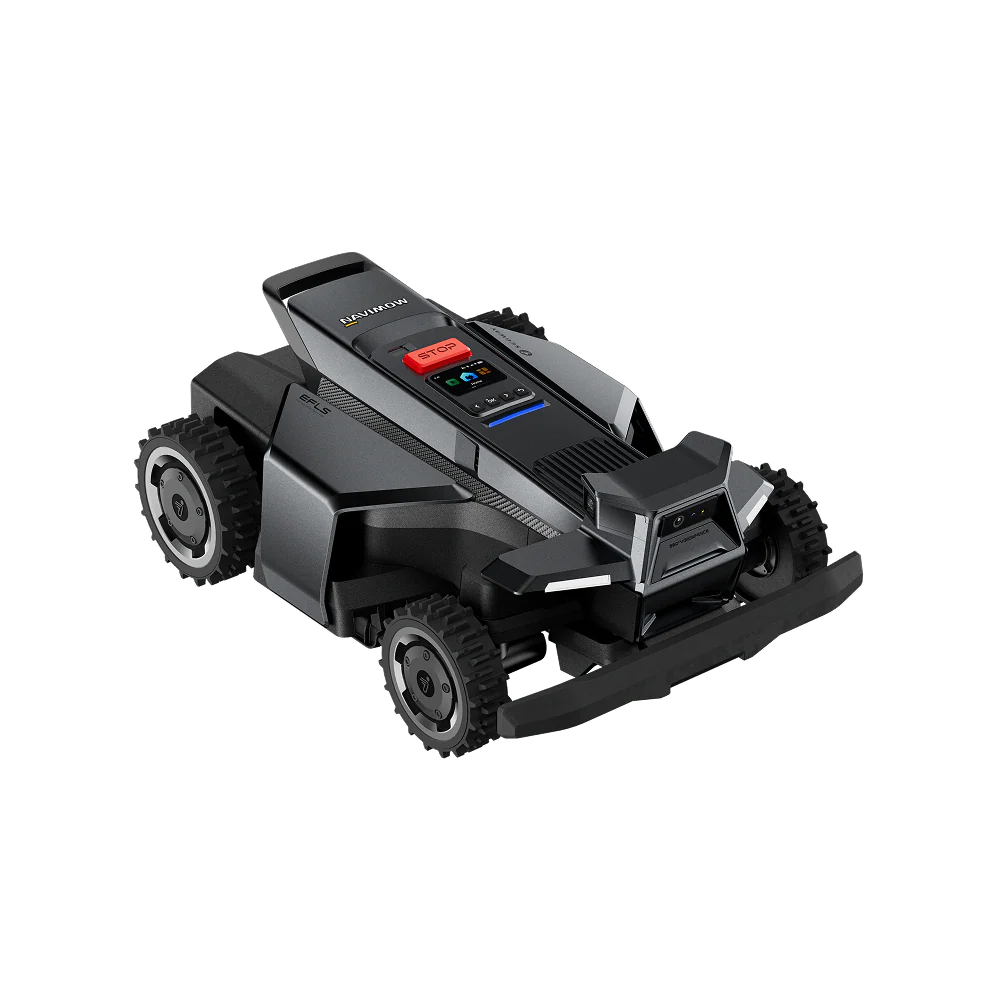
Core Technology
The End of Perimeter Wires
The wire issue has been the single biggest barrier to robot mower adoption for most homeowners. Burying perimeter wire is disruptive, time-consuming, and prone to failure (a single shovel nick ends your mowing season). The X4 requires none of it.
Instead, setup uses a one-tap Auto Mapping system where the mower drives the perimeter of your lawn and creates a GPS boundary in the app. You can then refine the map using GeoSketch — essentially drawing your lawn zones, no-go areas, and passage corridors directly on your phone. The whole process typically takes 20–30 minutes for a standard property, versus the half-day-plus you’d spend burying wire with older systems.
The navigation technology behind this is worth understanding. The X4 stacks three systems:
Network RTK (NRTK) — Rather than setting up a local antenna on a tripod in your yard, the X4 connects to existing network RTK correction stations via 4G, achieving centimeter-level GPS accuracy without any physical infrastructure. Segway includes NRTK access for free, with cellular data also provided at no extra cost (the X430 includes 1 year of Connect+ service; the X450 comes with 2 years, renewing at $32.90/year after that). A SIM card is pre-installed.
360° VSLAM (Visual Simultaneous Localization and Mapping) — Cameras around the mower continuously build and update a visual map of the environment. This is what keeps the mower oriented under tree canopy where GPS signals degrade, using visual landmarks rather than satellite data.
VIO (Visual-Inertial Odometry) — An inertial measurement system tracks the mower’s own movement to fill in any gaps between GPS and camera fixes, ensuring continuous positioning even during rapid direction changes.
Important caveatWhile Segway markets the X4 as “antenna-free,” the unit does ship with a GNSS antenna and installation hardware in the box. In most suburban and rural areas with good 4G coverage, NRTK will work seamlessly and the antenna goes unused. In areas with weak cellular coverage, you’ll want that antenna as a fallback — so confirm 4G availability in your area before assuming fully wire-free operation. Navimow’s website includes a postcode/ZIP checker for NRTK coverage.
Slope & Traction
AWD That Actually Means Something
The marketing around AWD robot mowers has become a little loose — some units claim “4WD” while really just having beefier rear wheels. The Navimow X4 is the real thing: all four wheels are individually driven, with a Traction Control System (TCS) that continuously adjusts torque per-wheel to maintain grip. The center-of-gravity is balanced 5:5 front-to-rear, which matters enormously on lateral slopes where weight transfer can cause wheel-spin on one side.
The result is a rated slope capability of 84% (40°) — compared to the 20–25° limit most 2WD robot mowers hit before losing control. In real-world testing by several third-party reviewers, the X4 performed well even on wet, saturated slopes where lesser machines simply spin and stall.
“Even on saturated 40° banks, the traction control logic managed the torque perfectly without losing grip — the articulated steering geometry allowed the X4 to pivot without tearing the grass.”
The dual suspension system is worth a specific mention. Uneven ground — ruts, exposed roots, drainage dips — can cause single-suspension mowers to scalp grass on high spots or miss it entirely on low spots. The X4’s adaptive blade system floats the cutting deck independently over terrain changes, maintaining consistent cut height even where the ground surface is genuinely rough.
Signature Feature
Xero-Turn: The Problem Nobody Else Solved
Here’s a puzzle: robot mowers got good at navigating. They got better at climbing hills. But they kept tearing up lawns at the end of every mowing row. A standard zero-turn — where the outer wheel spins one direction and the inner wheel spins the other — is brutal on turf. On wet ground, it leaves mud tracks. Over a season, it creates bald patches at turning points.
Segway’s answer is Xero-Turn™, and it’s arguably the most thoughtful feature on the entire machine. The front wheels have dual-mode steering: under normal mowing conditions, they behave like automotive Ackermann steering (where the inner wheel turns on a tighter radius than the outer). When the algorithm determines a tight turn is needed, the front wheels switch to a coordinated zero-turn mode that keeps all four wheels rolling — never skidding — through the rotation.
The practical effect is that the X4 can navigate into tight corners and complete 360° turns without the wheel-scrub damage that makes other AWD robot mowers a liability on fine lawns. For anyone who has watched a previous-generation robot excavate a small roundabout in their Kentucky bluegrass, this matters.
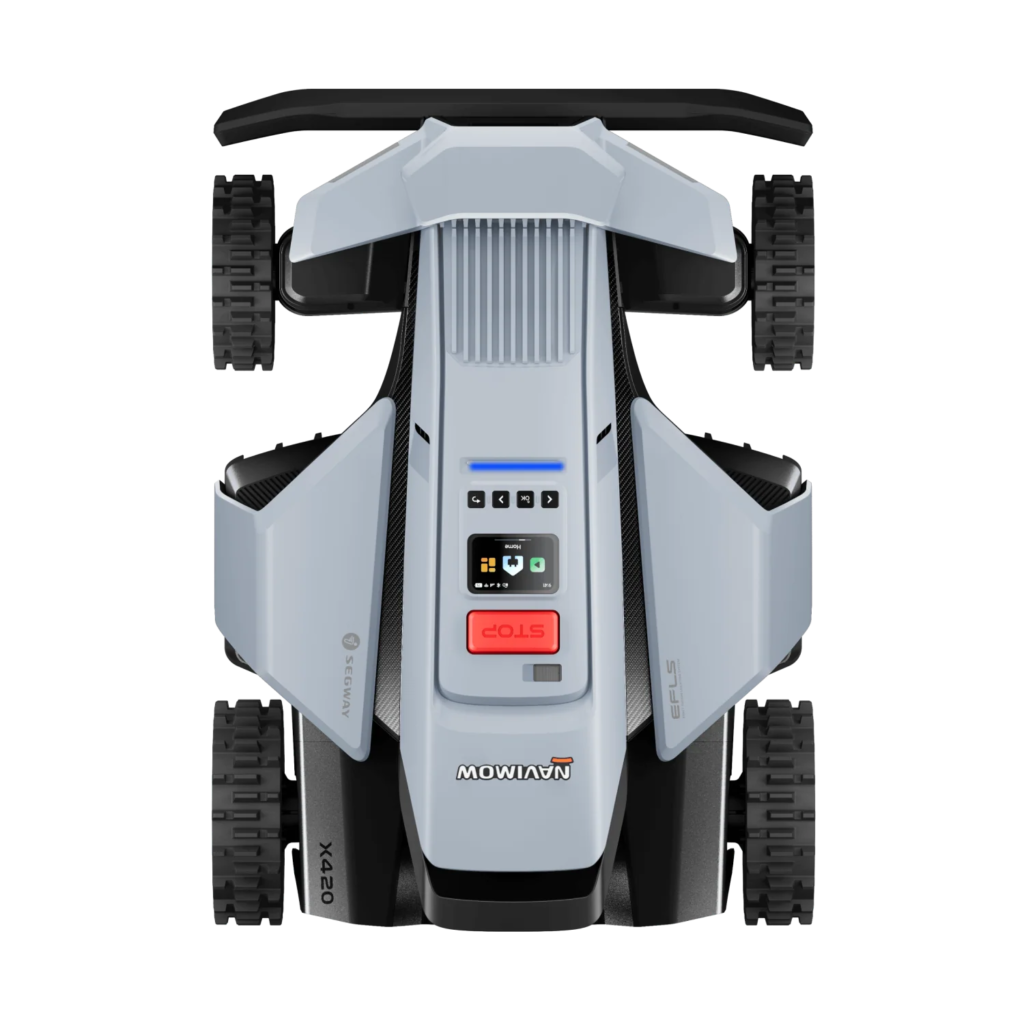
Cut Quality
The Cutting System
The X430 and X450 use a dual-disc configuration with 12 blades total across a 17-inch cutting width. Two 180W motors power the discs independently — significantly more power than the single 60–80W motors found in most consumer robot mowers. The practical benefit isn’t just raw cutting force; it’s the ability to handle thick, tall, or dense grass without bogging down or having to slow to a crawl.
Cutting height is adjustable from 0.75 to 4 inches, with what Segway calls “8-layer adaptive cutting” — when the mower encounters grass that’s grown particularly tall, the blades automatically tackle it in graduated passes rather than trying to take everything in a single aggressive cut. This reduces clogging and produces a cleaner finish on overgrown sections.
For edge finishing, the dual-disc layout extends cutting coverage to the edge of the mower’s body width, producing cleaner perimeter cuts than single-disc machines with a larger “dead zone” on one side. You will still likely want to hand-trim along hard edges like walls and fence posts, but the X4 handles grass edges well.
Smart Features
The App and Ecosystem
The Segway Navimow app is polished by the standards of the category. You can manage up to 120 separate mowing zones, set scheduling by zone, define no-go areas visually, track the mower in real time via GPS, and configure cutting height per zone (useful if you have a decorative lawn at the front and a rougher play area at the back).
GeoFence alerts notify you if the mower leaves its defined area, and lift detection alerts fire if the unit is picked up unexpectedly — a useful theft-deterrence feature. The mower is compatible with Amazon Alexa and Google Home for basic voice commands. Water resistance is rated IPX6, meaning hosing it down for cleaning is fine.
One area to watch: the Connect+ subscription. After the included free period, it costs $32.90 per year. This covers NRTK access and connected features. That’s not outrageous for the category, and NRTK is genuinely valuable — but it is a recurring cost to factor into your total ownership calculation.
Competitor Comparison
How It Stacks Up
The robot mower market at the $2,000–$3,500 price point has become genuinely competitive. Here’s an honest breakdown of where the X4 fits relative to its main rivals.
| Feature | Navimow X4 | Mammotion Luba 2 AWD | Husqvarna 440iQ EPOS | Worx Landroid Vision 4WD |
|---|---|---|---|---|
| Starting Price | ~$2,499 | ~$2,199 | ~$3,500+ | ~$2,299 |
| Wire-Free Setup | Yes (NRTK) | Yes (RTK) | Yes (EPOS) | Yes (Cloud RTK) |
| Slope Rating | 84% / 40° | 75% / 37° | 50% / 27° | 84% / 40° |
| Turf-Safe Turns | Xero-Turn™ (patented) | Skid-steer (turf damage reported) | Standard | Cut-to-Zero |
| Obstacle Avoidance | 360° AI VisionFence | AI Vision | Collision only | AI Vision (Cloud) |
| Cutting Width | 17″ dual-disc | 15.7″ | 9.5″ | 12.6″ |
| Subscription Required | $32.90/yr after free period | None | None | None |
| Voice Control | Alexa + Google Home | App only | App only | App only |
| Max Coverage | 1.5 acres (X450) | 2 acres (LUBA2-5000H) | 2 acres (440iQ) | 1 acre |
vs. Mammotion Luba 2 AWD
The Luba 2 is the X4’s most direct competitor and a genuine machine in its own right. It’s slightly cheaper, and larger models cover more acreage. However, the Luba 2 uses skid-steer turning — reviewers and owners consistently report turf marking in corners over time. For anyone who cares about lawn health and aesthetics, Xero-Turn gives the X4 a meaningful edge. If raw coverage area at lower cost is your priority and turf marking doesn’t concern you, the Luba 2 remains competitive.
vs. Husqvarna 440iQ EPOS
Husqvarna is the old guard — their EPOS wire-free system is genuinely reliable and the brand carries decades of mower engineering experience. But the 440iQ typically costs $1,000+ more than the X4 for comparable specs, has a narrower cutting deck, and lacks the AI camera-based obstacle avoidance that the X4 integrates. At the 440iQ’s price point, the X4 Series is simply better value.
vs. Worx Landroid Vision 4WD
The Worx is an interesting competitor — it matches the X4’s slope rating and also uses wire-free Cloud RTK, at a slightly lower price with no subscription. Its cutting width is narrower, and the obstacle avoidance is cloud-processed rather than onboard. It’s a legitimate alternative, especially for budget-conscious buyers, though the X4’s onboard AI processing tends to produce faster obstacle response.
Limitations
What the X4 Gets Wrong
No machine is perfect, and the X4 has real limitations to be aware of before buying.
Heavy canopy cover. The X4 works best in yards with less than approximately 30% tree canopy coverage. While VSLAM uses visual landmarks to navigate under trees when GPS drops out, dense canopy over large portions of a lawn will degrade performance. The mower handles occasional patches of tree cover well, but heavily wooded properties are not its ideal environment.
Night mowing is limited. The X4 includes headlights, and RTK navigation functions at all hours — but the AI vision system for obstacle avoidance performs best in daylight. Scheduling it for overnight runs means less effective obstacle detection, which could result in the occasional bump rather than a clean avoid.
It’s a heavy unit. The X4 is a substantial piece of hardware. You won’t be carrying it often, but moving it for winter storage or transporting it for servicing requires real effort. Worth factoring in if you have mobility considerations.
Battery longevity is an open question. Like any lithium battery system, the X4’s pack will degrade over time — likely 3–5 years before meaningful capacity loss. Segway’s batteries are serviceable and replaceable, but it represents a future cost. This is true of all robot mowers in the category.
The subscription cost. $32.90 per year is not steep, but it’s worth noting that the Luba 2 and Worx have no ongoing fees. Over a 5-year ownership period, Connect+ adds $164 to total cost of ownership — not deal-breaking, but real.
Buying Guide
Should You Buy It?
Buy the X4 if…
- Your lawn is 0.5–1.5 acres with slopes, uneven terrain, or multiple zones
- You’ve had turf damage from a previous robot mower’s turning system
- You want truly wire-free setup without a local antenna
- Your yard has dense or tough grass that taxes smaller motors
- You want the best obstacle avoidance in the current market
- You’re replacing a riding mower on a challenging, hilly property
Look elsewhere if…
- Your lawn is flat, under 0.5 acres — the i-Series is far better value
- You rent, or move frequently — setup investment doesn’t pay off
- Your property has heavy tree coverage (30%+ canopy)
- $2,500+ is a stretch — wired alternatives exist at half the price
- You need coverage beyond 1.5 acres — look at Luba 2 or Yarbo
- You strongly prefer no ongoing subscription cost
What to watch before you buy
A few honest caveats.
Independent testing is still limited. The X4 launched in early 2026 and much of the published coverage leans on Navimow’s reviewer materials and product-page specs rather than a full season of real-world use. The hardware story is convincing; the durability story isn’t written yet.
The slope rating needs field verification. See above. If your decision hinges on that number, wait for more long-term reports, or buy from a retailer with a generous return window and test it yourself in week one.
The price is genuinely premium. At $2,499 and $2,999, these compete with installed professional systems. Navimow’s own X350 remains available around $2,799 with more mature software and a longer track record — a real consideration if you don’t need the new drive system.
Sky visibility still matters. Vision-assisted navigation is a strong fallback, not magic. A yard that’s essentially a tunnel of mature canopy will still challenge any RTK-based mower.
Who should buy which
Buy the X430 if your lot is under an acre. You get every bit of the X4 platform — the AWD, the 17-inch deck, the 360-degree obstacle detection, the 40-degree slope rating — and you keep $500. For the majority of large suburban lots, this is the correct model, and buying up is just paying for unused capacity.
Buy the X450 if you’re routinely over an acre, if your property is carved into several disconnected zones, or if you want buffer for a heavy growth season when you’d rather the mower not be running at its limit. The extra battery also means fewer charge cycles per mow, which is a modest longevity benefit over years of use.
Buy neither if your yard is a flat quarter-acre rectangle. This is far more mower than that job needs, and Navimow’s own i-series will cut it just as well for a fraction of the money. The X4 earns its price on difficult ground — hills, ruts, canopy, complexity. On easy ground, it’s just an expensive way to cut grass.
If you’ve got the difficult ground, though, this is currently the most capable wire-free package you can buy without stepping up to a commercial installed system.
Final Verdict
Our Take
The Navimow X4 Series is the most technically complete robot mower on the consumer market in 2026. It addresses the three problems that have held the category back for years: slope capability, turf damage during turns, and navigational reliability without perimeter wires. It does all three meaningfully better than any previous-generation machine.
At $2,499, it is a significant investment. But for a homeowner with a genuinely challenging property — hills, multiple zones, dense grass, or terrain that demands a riding mower or professional service — the X4 offers a credible path to reclaiming those weekends. The math on avoided professional mowing costs or the replacement of a gas riding mower (with its ongoing fuel, blade, and maintenance expenses) often makes the X4 look reasonable within two to three seasons.
The Mammotion Luba 2 remains the budget-forward alternative for buyers who can tolerate its turning behavior, and the Worx Landroid Vision 4WD is worth considering if subscription-free ownership is a priority. But if lawn health and sophisticated technology are the criteria, the X4 wins the current generation.
Bottom Line
The Segway Navimow X4 is a 9.5/10 machine — a premium product that genuinely delivers on the promise of autonomous lawn care for complex properties. Its only meaningful weaknesses are price and the $32.90/year Connect+ subscription after the free period. For the right yard, there is nothing better on the market today.
The Navimow X430 and X450 are available directly from Navimow and via Amazon. Prices cited are as of publication date and subject to change.