

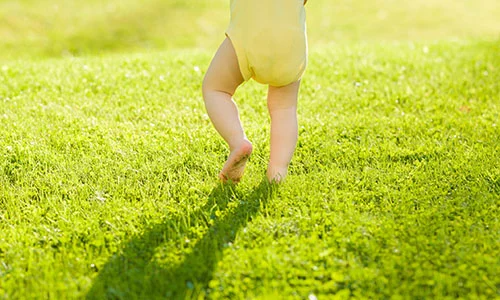
Many families share one thing in common: their baby’s first outdoor adventures do not begin at a park or playground. It all starts much closer to home, right on the lawn. From feeling grass beneath tiny hands for the first time to taking those unforgettable first steps, the lawn area often serves as a child’s earliest introduction to the outdoors.
However, not every lawn is automatically ready for such milestones. Uneven terrain, bare patches, and hidden debris can put a question mark on outdoor exploration. Babies tend to experience a ‘perfectly functional’ lawn from a different perspective. For starters, their idea of exploration will involve lots of crawling, touching, and interacting at ground level.
As per a 2024 study involving 1,656 preschool children, parental perceptions of safety were associated with children’s outdoor play. The study concluded that it is important to address the social safety of neighborhoods to promote outdoor play in preschool children.
Fortunately, it doesn’t take much to prepare your lawn for a growing family. This article will share four thoughtful upgrades worth considering before your baby’s first outdoor adventures begin.
A Smooth and Cushioned Surface
Now, this is an upgrade that almost any homeowner can benefit from, especially those with a growing family. During a Q&A session, interior designers Ashley Mutch and Genevieve Webb advised against treating the outdoor area as an afterthought. Mutch said, “Think of it as an extension of the home’s interior. Design continuity is key.”
While that’s in relation to spatial planning, this philosophy can help you see your lawn area as an extended part of the home. Would you want your home’s interior flooring to be rough, uneven, and full of bumps? Then, why make exceptions for the lawn?
Before your child has grown enough to run around the lawn, they will be crawling and rolling around a lot. This means they will get to experience every bump and uneven section of the lawn firsthand.
Issues like bare spots, compacted soil, and exposed roots seem minor from an adult’s perspective. However, they can make outdoor exploration challenging for children, increasing the risk of scrapes and falls. A smooth and cushioned lawn surface becomes more welcoming for little ones to move freely and explore.
No, you do not need a complete overhaul for this upgrade. Just consider the following improvements:
- Have any shallow holes or depressions filled and closed.
- Overseed bare patches or thin spots to create a fuller look.
- Cover exposed tree roots with soil and grass for better comfort and safety.
- Reduce soil compaction, which results in thin, unhealthy grass.
- Remove rocks, sticks, or other debris on the way, as babies love to explore with their hands.
A denser lawn with enough cushion provides a softer place to sit and crawl. An even surface supports balance as children begin taking their first steps. Most importantly, parents can feel stress-free about their child’s outdoor exploration.

Child-Conscious Lawn Care Products and Practices
The minute someone becomes a parent, they sense a natural hypersensitivity in them, even when it comes to products of daily use. Decisions that previously seemed straightforward now involve more research, more questions, and a greater focus on safety.
This is especially true when a baby begins interacting with their environment. Our little ones tend to crawl across surfaces, touch everything within arm’s reach, and then put their hands in their mouths. The natural parental instinct is to be cautious of the products and substances that children encounter.
Such an awareness extends beyond lawn care products. Issues highlighted on public and legal platforms can increase awareness and vigilance. Take the example of the Enfamil lawsuit filed by parents whose babies were harmed by commercial baby formulas.
TorHoerman Law shares that the manufacturer, Mead Johnson, has been accused of failing to warn about potential risks associated with certain bovine infant formulas. While the litigation concerns infant nutrition, it touches upon the reality of modern parenting. It is perfectly valid for parents to want to better understand the products that may affect their children’s well-being.
In fact, you need to carry that mindset forward into your lawn. From the viewpoint of lawn care products and practices, taking a closer look at the following is important:
- Fertilizer applications, including when products are applied and how long children should steer clear of treated areas
- Pest control treatments, particularly if your baby frequently crawls and plays on the grass
- Weed management practices, including possible suitable alternative approaches for certain areas of the lawn
- Product labels and usage instructions
- Lawn care schedules so treatments can be planned around family activities and outdoor playtime
Proper Lawn Care Routine
For a baby’s first steps on the lawn, many homeowners focus only on the condition of the grass. What’s equally important is maintaining it over time. It doesn’t take long for a healthy lawn to turn into an overgrown and cluttered mess.
Now, this upgrade is less about making a one-time improvement and more about creating a reliable routine that keeps on giving. After all, one cannot expect a baby to schedule their curiosity around mowing days. The following few changes can make a huge difference:
- Maintaining a consistent mowing schedule
- Keeping unnecessary additions under control, including fallen branches, rocks, and other items that accumulate over time
- Addressing even the small issues promptly, be it thinning grass or damaged sections of the turf
- Managing seasonal growth, without which the lawn may become difficult to navigate or use
Some homeowners even choose automated maintenance solutions in the form of robotic mowers. That explains why the worldwide robotic lawn mower market had a value of $10.5 billion in 2025. The market is projected to reach $30.3 billion by 2034, exhibiting a CAGR of 12.5%.
Plus, the growing prominence of lawn maintenance and gardening is expected to drive the pace of the market further. For homeowners with growing families, this upgrade is about reliability. You can ensure that your lawn remains ready for outdoor exploration whenever curiosity strikes.
A Supervision-Friendly Layout
Let’s move a bit beyond the lawn’s grass, since babies do not experience outdoor spaces in isolation. Their earliest outdoor adventures typically happen alongside a parent, grandparent, or caregiver who can supervise and share in the experience.
As a result, the lawn itself must function as an engaging family environment. You need to stop viewing the lawn as a standalone landscape feature. Instead, think about how the space can support longer, more comfortable outdoor visits for both children and adults.
Going by recent data, such an upgrade can have a meaningful impact on the way families use outdoor spaces. For instance, one 2025 report shared that 60% of the respondents were willing to spend more time with their family and friends after making upgrades to their outdoor areas. In this context, a supervised and shaded play space would include the following:
- Comfortable seating for caregivers so they can watch over outdoor play
- Shade features like trees, pergolas, or umbrellas that make outdoor time more relaxing
- A designated area for self-exploration where babies can crawl, sit, and practice standing while remaining within view
- Outdoor blankets or picnic-style spaces that create a comfortable setting for tummy time and sensory play
- Clear sightlines across the yard so caregivers can easily monitor the movements of the child
These additions seem simple, but they sure make outdoor experiences more enjoyable. Babies often feel more confident exploring when a familiar caregiver is nearby, and with this upgrade, you will only boost their natural sense of curiosity.
FAQs
At what age can babies start playing on the lawn?
Many babies can enjoy supervised outdoor time on the lawn as early as infancy. Their experiences might look different depending on their developmental stage. Younger babies may simply lie down and observe their surroundings, whereas older ones can crawl and practice standing.
How can parents ensure their lawn is suitable for infants and toddlers?
A baby-friendly lawn starts with a combination of safety, maintenance, and comfort. Homeowners can make their lawn suitable for babies by addressing uneven areas, removing debris, and maintaining a consistent mowing routine. Additionally, creating shaded areas for supervision can help make outdoor exploration more enjoyable.
Why is outdoor exploration important during early childhood?
Outdoor experiences introduce children to new sights, sounds, textures, and movements that support curiosity and discovery. From feeling the texture of grass for the first time to watching leaves sway with the wind, outdoor environments help in a child’s brain and sensory development.
Recent Data on Lawn Care and Children’s Outdoor Play
| 2024 study involving 1,656 preschool children on parental perceptions and their association with children’s outdoor play | Addressing the social safety of neighborhoods is important to promote outdoor play in preschool children |
| Worldwide robotic lawn mower market valuation and projection | $10.5 billion in 2025, expected to become $30.3 billion by 2034 at a CAGR of 12.5% |
| 2025 report on respondents willing to spend more time with their family and friends after making upgrades to their outdoor spaces | 60% |
Is this a landscaping project you need to mark on your calendar? Perhaps, but that’s just the partial truth. With the passing of each mowing season, your little one will have grown right before your eyes.
In that sense, the lawn will become a treasure trove of precious memories. It will remind you of your baby’s first wobbly steps and their unrestrained excitement at feeling the texture of grass. So, are you ready to turn an ordinary lawn into a place of discovery for your baby?