

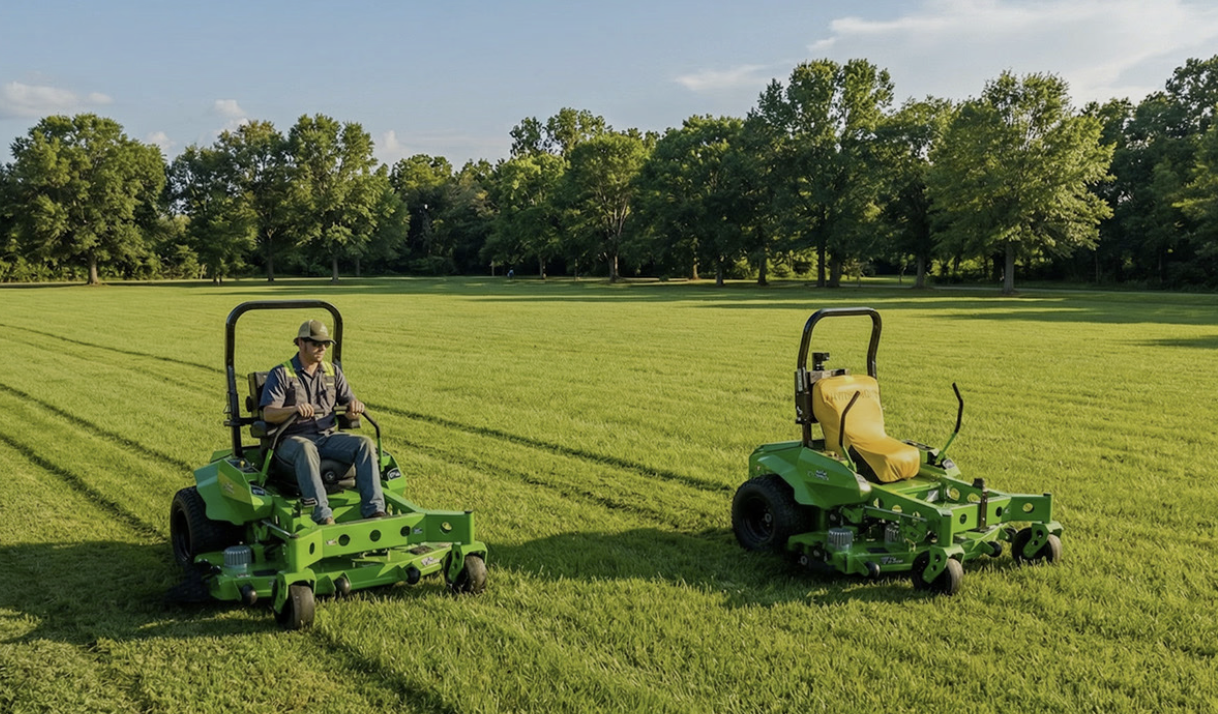
The commercial landscaping industry is currently navigating a transformative era, driven by persistent labor shortages, rising operational costs, and an increasing demand for sustainable practices. In this landscape, automation has transitioned from a futuristic concept to a practical necessity. Among the leaders of this technological shift is Havenshine Technologies, a company dedicated to empowering commercial mowing operations through advanced robotics and artificial intelligence. This review explores Havenshine’s flagship offerings—the Sidekick and Hero systems—and evaluates their impact on productivity, safety, and the bottom line for modern landscaping enterprises.
The Havenshine Philosophy: Human-Centric Automation
Unlike many competitors that aim to replace human labor entirely, Havenshine’s approach is rooted in augmentation. Their philosophy centers on the idea that technology should serve as a “force multiplier” for skilled operators. By automating the repetitive and physically demanding aspects of mowing, Havenshine allows landscaping companies to achieve more with their existing workforce. This human-centric model is particularly evident in their Sidekick system, which maintains the operator’s role while doubling their output.
“Our fully autonomous solution, ideal for controlled environments, benefits from the substantial training data provided through Sidekick, giving our autonomous systems a unique advantage in safety and precision.” – Havenshine website
This philosophy underscores a broader trend in industrial robotics: the transition from replacing humans to empowering them through collaborative systems. By keeping a human “in the loop,” Havenshine addresses both the technical challenges of full autonomy and the psychological barriers to adopting new technology in traditional industries.
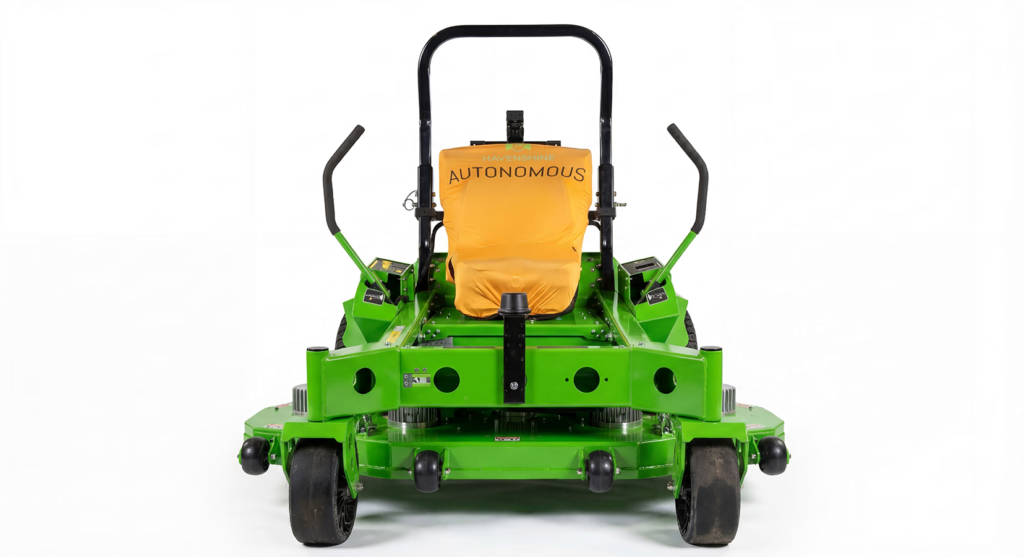
Product Deep Dive: The Sidekick Semi-Autonomous System
The Sidekick is perhaps Havenshine’s most innovative contribution to the market. It is a semi-autonomous solution designed to turn standard zero-turn radius (ZTR) mowers into smart, collaborative machines. The core value proposition of the Sidekick is simple yet profound: it allows a single operator to manage two mowers simultaneously.
How It Works: The “Follow-the-Leader” Model
The Sidekick operates on a sophisticated real-time path-tracking system. An operator manually drives a primary mower (the “Lead”), while a second mower equipped with the Sidekick system (the “Follower”) autonomously replicates the lead mower’s path with high precision. This “shadowing” effect ensures that the follower mower covers the adjacent swath of grass, effectively doubling the width of each pass.
Technical Specifications and Performance
The Sidekick is not just a software layer; it is a robust hardware-software integration. It is primarily compatible with leading electric ZTR platforms, aligning with the industry’s shift toward electrification. One of its standout features is its operational speed. While many fully autonomous mowers are limited to lower speeds for safety reasons, the Sidekick can operate at speeds up to 12 mph. This is possible because a human operator is always present to supervise the environment, allowing the AI to focus on path precision rather than complex obstacle avoidance in unpredictable public spaces.
| Feature | Sidekick Specifications |
| Automation Level | Semi-Autonomous (Operator-Supervised) |
| Operational Speed | Up to 12 mph |
| Productivity Rate | 3.5+ acres per hour |
| Compatibility | Leading Electric ZTR Platforms |
| Primary Benefit | Doubles operator productivity |
Product Deep Dive: The Hero Fully Autonomous Solution
For environments that are more controlled and require minimal human intervention, Havenshine offers the Hero. This is a fully autonomous mowing solution that represents the pinnacle of Havenshine’s AI and sensor technology.
Advanced AI and Safety Systems
The Hero system is equipped with a comprehensive suite of sensors, including 3D LiDAR and high-resolution cameras. These sensors provide the machine with a 360-degree view of its surroundings, enabling it to detect and navigate around obstacles such as trees, benches, and pedestrians with extreme reliability. The navigation system is hyper-precise, allowing the Hero to produce the “crisp stripes” that are the hallmark of professional turf management.
Ideal Use Cases for Hero
The Hero is best suited for large, open, and relatively controlled environments where a human operator’s constant presence is not required. Examples include:
•Corporate campuses
•Municipal parks
•Sports complexes
•Large residential estates
By deploying the Hero in these areas, companies can reallocate their skilled labor to more complex tasks like pruning, planting, or client relations, while the Hero handles the bulk of the turf maintenance.
Economic Impact: ROI and Pricing Models
For any commercial mowing company, the decision to adopt automation is ultimately a financial one. Havenshine has addressed the barrier of high entry costs by offering flexible pricing models that cater to different business sizes and needs.
Retrofit vs. New Systems
One of Havenshine’s most significant advantages is its retrofit option. Instead of requiring companies to purchase entirely new, expensive robotic mowers, Havenshine can equip existing mowers with their technology. This significantly lowers the capital expenditure required to modernize a fleet.
| Pricing Model | Estimated Cost | Best For |
| Retrofit Option | Starting at $749/month | Companies with existing, high-quality ZTR fleets |
| New Integrated System | Starting at $1,749/month | Companies looking to expand their fleet with new electric mowers |
Labor and Productivity Gains
The return on investment (ROI) for Havenshine systems is primarily driven by labor savings. In an industry where labor can account for over 50% of operating costs, the ability to double an operator’s productivity with the Sidekick is a game-changer. By reducing the number of man-hours required per acre, companies can either take on more clients with the same staff or reduce their reliance on seasonal labor, which is increasingly difficult to source.
Competitive Landscape: How Havenshine Stands Out
The autonomous mowing market is becoming increasingly crowded, with players like Scythe and Greenzie vying for market share. However, Havenshine’s strategy distinguishes it from these competitors in several key ways.
Havenshine vs. Scythe
Scythe builds its own fully integrated autonomous machines from the ground up. While this allows for a highly optimized hardware-software package, it also means a higher upfront cost and a complete departure from the mowers that landscaping crews are already familiar with. Havenshine’s retrofit approach allows for a more gradual and affordable transition.
Havenshine vs. Greenzie
Greenzie offers a software-first approach, often partnering with manufacturers like Wright to integrate their technology. Havenshine’s Sidekick offers a unique “semi-autonomous” middle ground that Greenzie does not emphasize as heavily. This middle ground is crucial for companies that operate in high-traffic public areas where full autonomy might still face regulatory or safety hurdles.
Real-World Application: The Langton Group Case Study
The efficacy of Havenshine’s technology is best demonstrated through its real-world deployments. The Langton Group, a prominent landscaping and snow removal company, has successfully integrated Havenshine’s solutions into their operations. By deploying driverless commercial mowers, they have reported significant improvements in efficiency and the ability to maintain high-quality standards even during peak seasons. This case study serves as a proof of concept for other commercial entities considering the leap into automation.
Pros and Cons of Havenshine Solutions
Pros
•Trusted to operate in busy public areas with unmatched safety and efficiency.
•Scalability: The retrofit option allows for easy scaling across an existing fleet.
•Productivity: The Sidekick effectively doubles the output of a single operator.
•Safety: Advanced AI and LiDAR systems ensure safe operation in various environments.
•Allows for efficient obstacle removal and handling of various edge cases.
•Sustainability: Strong compatibility with electric platforms supports “green” initiatives.
•Speed: High operational speeds (12 mph) compared to many fully autonomous competitors.
Cons
•Initial Learning Curve: Operators require training to manage multiple machines effectively.
•Platform Dependency: While compatible with many, it is still optimized for specific electric ZTR platforms. Though Havenshine has plans to make the technology available on all major mower brands. Support is currently available for gas-powered mowers to be used for the human-operated “Lead” mower.
•Supervision Requirements: The Sidekick still requires a human operator, which may not be the goal for companies seeking 100% autonomy.
Conclusion: The Future of Commercial Mowing
Havenshine Technologies is not just selling robots; they are providing a solution to the most pressing challenges in the commercial landscaping industry. By offering both semi-autonomous and fully autonomous options, they provide a flexible pathway for companies to adopt technology at their own pace.
As we look toward the future, the integration of AI and robotics will only deepen. Havenshine’s commitment to using data from their Sidekick deployments to further train and refine their Hero autonomous system suggests a continuous cycle of improvement. For commercial mowing companies looking to stay competitive in 2026 and beyond, Havenshine offers a compelling, practical, and economically viable entry point into the world of automated turf management.
Need Help Choosing the Right Autonomous Solution for Your Company?
Just fill in this form and we’ll get right back to you. We’ll remove the stress and help you make more money with fewer employees.