


Your mowing customer asks whether you can also lay a stone path, replace the dead shrubs and spray the weeds along the fence. Do you need a license for landscaping work like that? It depends on the job and the state. A crew that calls itself “licensed” may hold a city business license, a state landscape contractor license or a pesticide license, and each one covers different work.

A new path is construction work, not upkeep.
The Short Answer
Most landscaping work falls into one of three groups:
- Mowing and routine upkeep. In the three states covered below, this generally needs no state landscape license. Local rules still apply: Small Business Administration guidance says the permits and licenses you need from your city, county and state depend on what you do and where.
- Building or installing a landscape. New lawns and plantings, irrigation, patios, walls and drainage. Where a state licenses landscaping, this is the work it covers, often above a dollar limit.
- Applying pesticides for pay. A state pesticide agency licenses this separately, and many states require it for any commercial use.
If you’re hiring, the same three groups tell you which license to ask about.
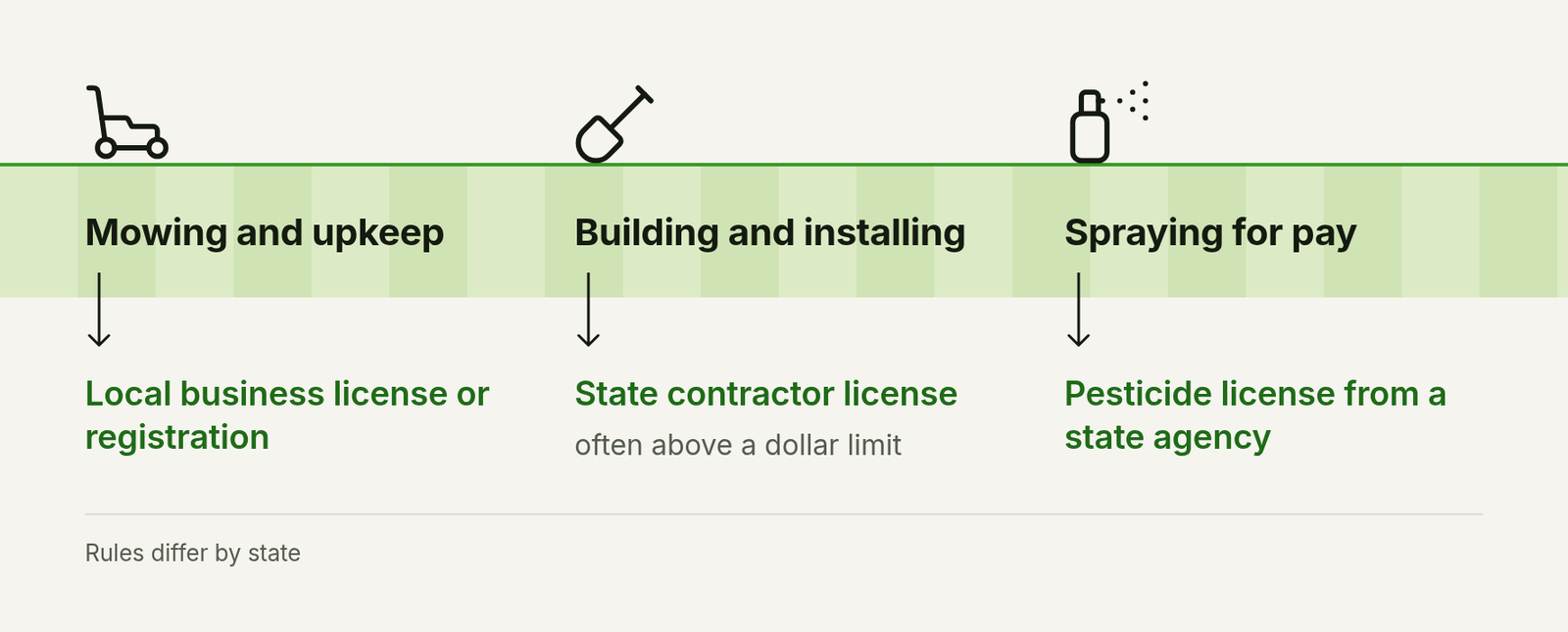
Three kinds of work, three different offices to check with.
Building or Installing a Landscape Is Where State Licenses Start
California’s contractor board (Contractors State License Board, or CSLB) lists irrigation, patios, walkways, retaining walls, plants and sod, drainage, fences and landscape lighting among common projects that need a contractor license. Oregon’s Landscape Contractors Board names much the same work and adds soil preparation and grading.
Whether a landscaping license applies also depends on job size:
| State | When a landscape license is needed | Who issues it |
|---|---|---|
| California | Jobs past the minor work exemption of $1,000, plus smaller ones that need a permit, or where the worker hires help or advertises as a contractor (landscaping class: C-27) | Contractors State License Board |
| Oregon | Landscape construction for pay, such as installing lawns, shrubs, trees, irrigation and drainage; maintenance needs no state license | Landscape Contractors Board (LCB) |
| North Carolina | Landscaping where all contracts for one job site reach $30,000 or more within any 12 months in a row (irrigation: separate license from $2,500) | North Carolina Landscape Contractors’ Licensing Board |
Since January 1, 2025, California’s minor work exemption is $1,000, up from $500, but CSLB points out a catch: the job can’t require a permit, and the unlicensed person can’t employ anyone on it. If an older CSLB page, such as its fact sheet on choosing a landscaper, shows $500, go by the newer figure. For the homeowner’s side of that rule, including penalties and where you stand after hiring someone unlicensed, there’s a guide to unlicensed work at legitpages.com, a site that explains California contractor licensing.
Do You Need a License to Mow Lawns?
Not a state license, at least in these three states. Oregon’s board says landscape maintenance isn’t regulated by the state and lists mowing, edging, weeding, refreshing bark mulch and adjusting sprinkler heads as work that needs no license. CSLB says California gardeners paid regularly to maintain landscaping generally don’t need a C-27. North Carolina’s landscape law doesn’t apply to lawn mowing, turf edging or debris removal.
Starting a lawn care business that only mows? You still have local rules to check: Oregon’s board, for one, points maintenance crews to their city or county.
The line gets thin with small construction. An Oregon maintenance business may replace plants or a lawn for a regular customer, up to $500 in labor and materials per job site per year, but it can’t advertise that work. Topping up gravel on an existing path is fine; building a new walkway isn’t.
Spraying Weeds or Pests Is a Separate License
Weed and pest control is where a mowing crew can cross a line without noticing. Under federal law, only certified applicators, or workers under their direct supervision, may apply restricted use pesticides. The EPA adds that many state agencies require certification for any commercial pesticide use, restricted or not. So if you spray a store-bought weed killer on a customer’s lawn, you may need a state license.
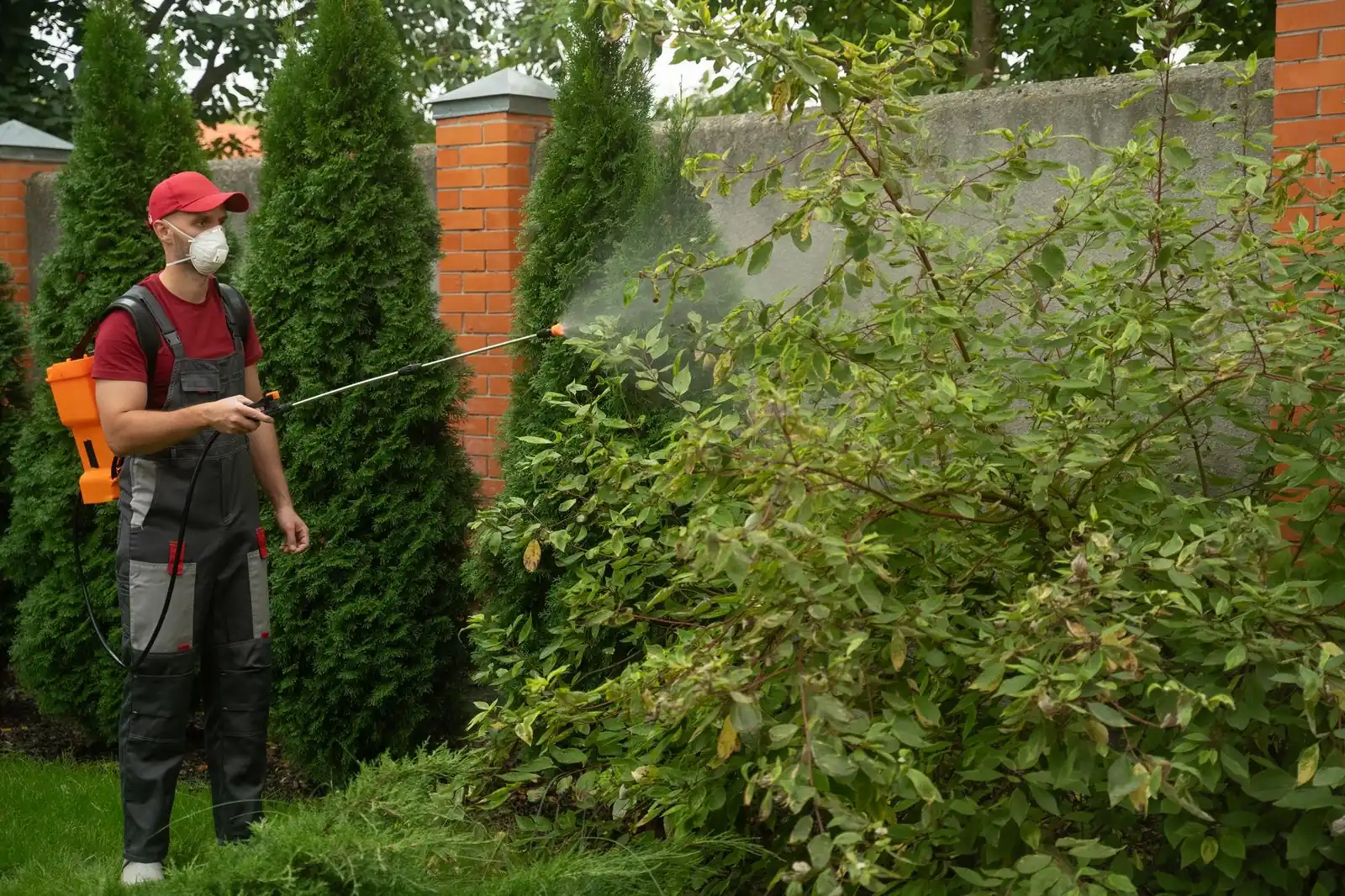
Paid spraying can call for its own license, apart from any landscape one.
You’ll usually get that license from a different office than the contractor board. California’s Department of Pesticide Regulation licenses businesses that apply pesticides for hire, including maintenance gardener pest control businesses. Oregon’s landscape board sends pesticide questions to the state Department of Agriculture. North Carolina’s landscape law leaves out fertilizing and weed control, but that exemption is from the landscape law only.
Each state has one agency that works with the EPA on federal pesticide rules. The National Pesticide Information Center keeps a directory of state pesticide regulatory agencies, and it lists finding out how to become a certified applicator among the reasons to contact yours. If your quote includes weed or insect treatment, ask who on the crew holds that license.
How to Check a Landscaper Before You Hire
Does the landscaper need to be licensed for your job? If so, checking takes a few minutes:
- Ask for the license numbers. Get the contractor license number and, for any spraying, the pesticide license number. North Carolina requires landscape contractors to show their board license number on business cards, contracts and vehicles.
- Search the state board, not the company’s website. CSLB’s Check a License search takes a license number, a business name or a person’s name. California license numbers contain only digits, up to eight of them. If you search by business name, CSLB’s tip is to type only 10 to 15 letters, leaving off a leading “The” or “A” on the first try. Oregon’s board has a Verify a License page.
- Check the class against the job. CSLB tells homeowners to make sure the license fits the trade their project needs. A pool calls for a C-53 license, held by the landscaper or a subcontractor, and tree pruning above 15 feet is on CSLB’s license list too.
- Get insurance certificates up front. CSLB names two to ask for before work begins: liability and workers’ compensation.
- Keep the deposit small. For California jobs, CSLB’s fact sheet advises never paying more than 10 percent or $1,000 down, whichever is lower. Contractors with a blanket bond filed at CSLB are the exception.
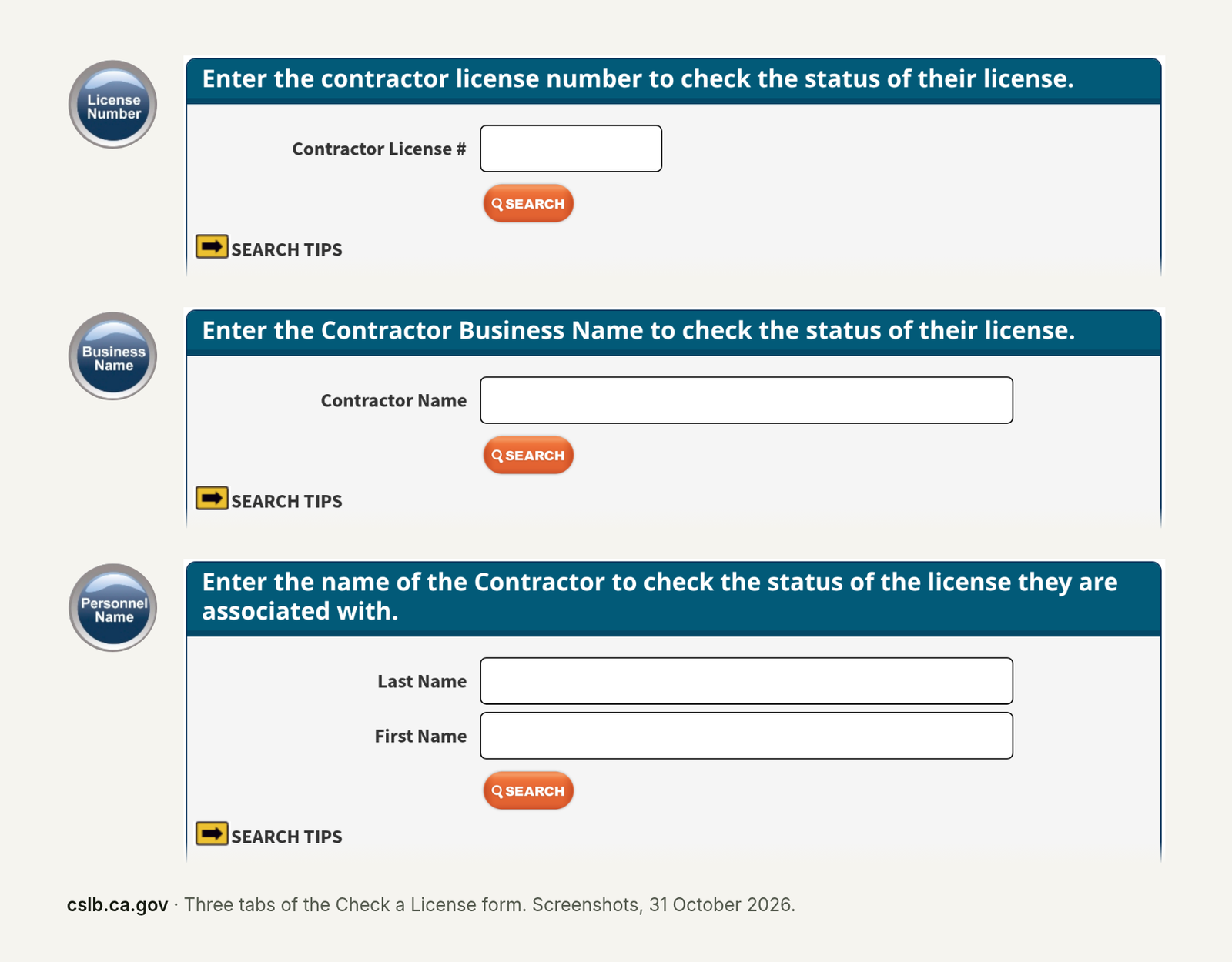
CSLB’s public search: three ways in, each with its own button.
Frequently Asked Questions
Can You Be a Landscaper Without a License?
For some work, yes. In the three states here, routine upkeep generally needs no state landscape license, and you can take small jobs within limits such as California’s $1,000 exemption, with its conditions, or North Carolina’s $30,000 threshold. Construction past those limits needs one, and so, in many states, does pesticide work for pay. North Carolina’s board, for one, requires an exam and a bond or letter of credit before it issues one.
What Does a C-27 License Cover?
C-27 on a California license means the Landscaping Contractor class. Under state regulations, a C-27 contractor builds, installs, maintains or repairs landscape systems and facilities for gardens and other grounds around a structure or on a plot of land, and prepares and grades that land.
Do Landscapers Need Insurance?
Treat insurance as its own check, apart from the license. CSLB’s landscaper fact sheet tells Californians to get both certificates before work begins and to have the contract require proof of workers’ compensation for employees. Elsewhere, ask the state licensing board what it requires.
The Bottom Line
Look at the work, not the word “licensed.” Mowing and upkeep sit outside the state licenses covered here. Building a landscape can need a contractor license, and paid spraying can need a pesticide license of its own. When a job needs either, get the license number and check it with the state before work starts.