

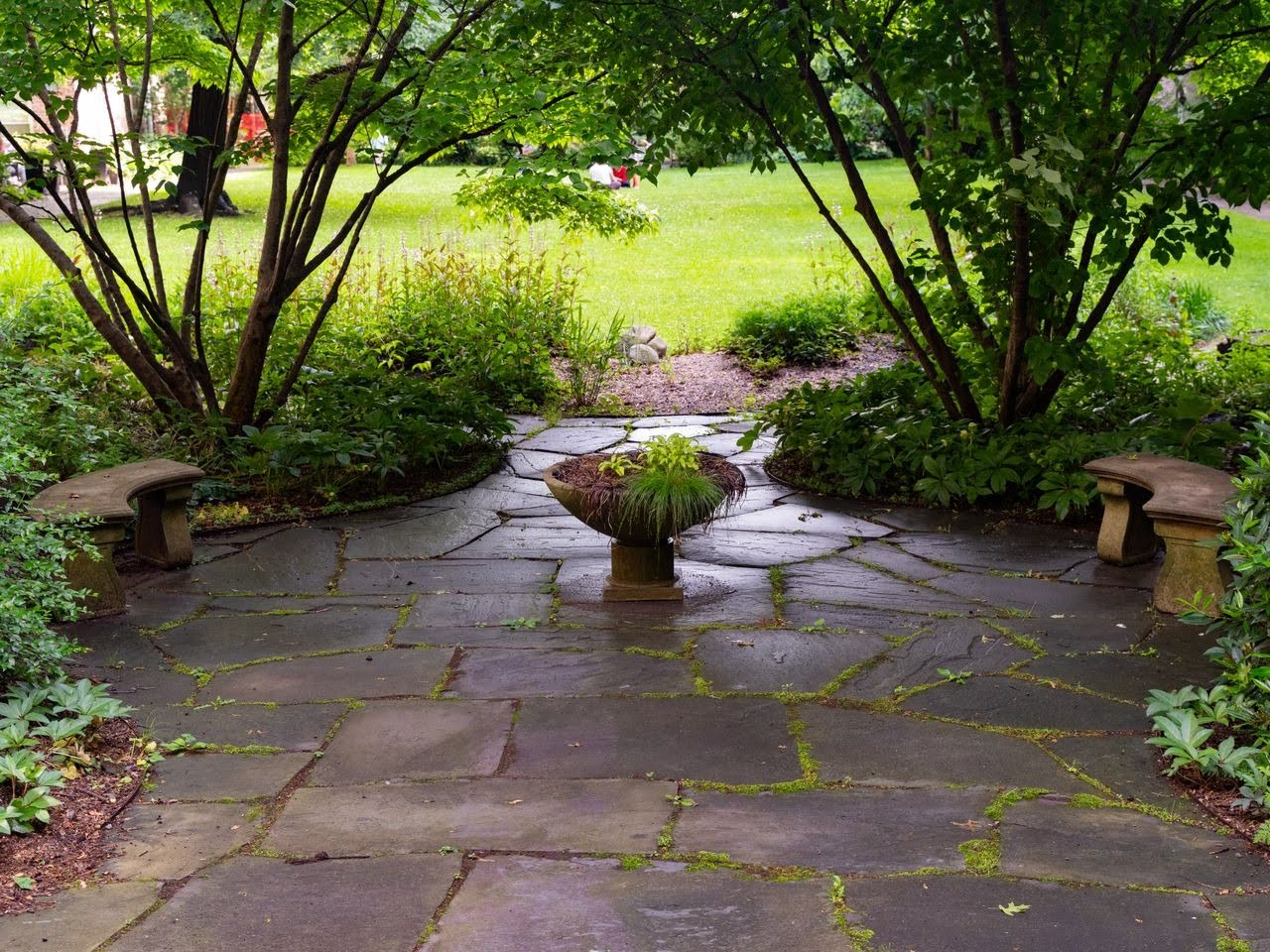
A walkway does more than get you from one side of the yard to the other. It shapes how your whole outdoor space feels, ties your landscaping together, and can either complement your lawn or work against it depending on how it’s built. If you’re mapping out a new backyard path, garden walkway, or connector between your patio and lawn, the material you choose will affect everything from drainage to how your grass grows along the edges.
Here’s how concrete and pavers compare when you’re planning around a lawn and landscaping, not just a walkway on its own.
How each option affects your lawn and garden beds
Concrete creates a solid, continuous surface with no gaps, which means water sheds off to the sides rather than soaking straight down. That runoff needs somewhere to go, so a concrete walkway usually calls for a bit more thought around grading and drainage to keep water from pooling along the grass or garden beds next to it.
Pavers, by contrast, are installed with small joints between each unit, and depending on the base material used underneath, they can allow some water to filter through rather than sheet off entirely. This can be a real advantage in yards where drainage is already a challenge, since a paver path can work with your landscaping’s natural water flow instead of redirecting all of it to one spot.
Royal Concrete in Tampa, FL offers free consultations if you want a professional opinion on what will work best for your lawn and yard.
Maintenance around grass and plantings
Concrete’s biggest advantage in a landscaped yard is how little it interferes with the plants and grass around it. There are no joints for weeds to creep through and no loose material that can spread into garden beds or get kicked into the lawn during mowing. Once it’s sealed, a concrete walkway is largely a “set it and forget it” feature that lets your attention go to the plants and grass around it instead of the hardscaping itself.
Pavers require a bit more upkeep at the edges. Grass and weeds can work their way up through the joints if they aren’t properly maintained, and mulch or soil from nearby beds can migrate onto the surface over time. On the plus side, pavers are easy to lift and reset if a tree root starts pushing up a section, which is a common issue in established yards with mature landscaping.
Design flexibility for backyard layouts
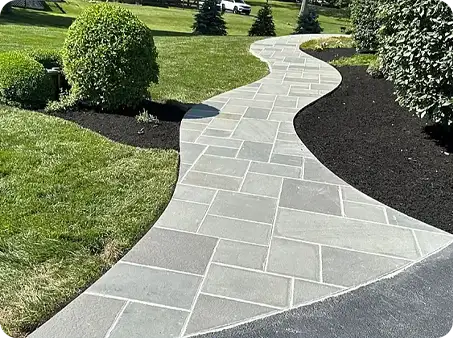
If your yard has curves, garden beds, or multiple zones like a patio, fire pit area, and lawn space that all connect, pavers offer more flexibility to follow organic shapes and blend materials. They also come in a range of colors and textures that can be mixed to tie a walkway visually into a patio or seating area elsewhere in the yard.
Concrete can also be shaped into curves and finished with decorative textures like stamped patterns or exposed aggregate, giving it a more custom look than a plain poured slab. It tends to work especially well for straighter, more defined paths, such as a walkway connecting a driveway to a backyard gate or a patio to a shed.
Durability in yards with heavy foot traffic or equipment
If your walkway sees regular use from mowers, wheelbarrows, or kids and pets running through the yard, concrete’s solid surface holds up well without shifting or settling unevenly. Pavers can shift over time if the base wasn’t compacted properly during installation, which sometimes shows up as an uneven surface after a few seasons of freeze-thaw cycles or heavy use.
Bringing it all together with your landscaping plan
The best choice often comes down to how the walkway fits into your broader yard, not just the path itself. A concrete walkway tends to be the stronger choice for high-traffic, functional paths where low maintenance matters most, while pavers shine in more decorative areas where you want the hardscaping to echo the character of the surrounding landscaping.
Whichever direction you lean, it’s worth having the walkway planned alongside your yard’s drainage and grading, so water is guided away from your lawn and garden beds rather than pooling against them.
If you’re planning a new walkway and want help figuring out what will work best with your yard’s layout and drainage, Royal Concrete can walk you through your options and help you land on a surface that complements your outdoor space for years to come.