
![Types of Lawn Mower Blades Expert Guide to Choosing the Right One [2026]](https://mowingmagic.com/wp-content/uploads/2026/01/Types-of-Lawn-Mower-Blades-Expert-Guide-to-Choosing-the-Right-One-2026-optimized.jpg)
Picking the right types of lawn mower blades stands as a crucial decision to achieve a well-manicured lawn. A sharp blade creates a clean cut, and using the wrong blade type leads to poor results, no matter how often you mow. The blade you select directly affects your grass cutting efficiency and your lawn’s overall health.
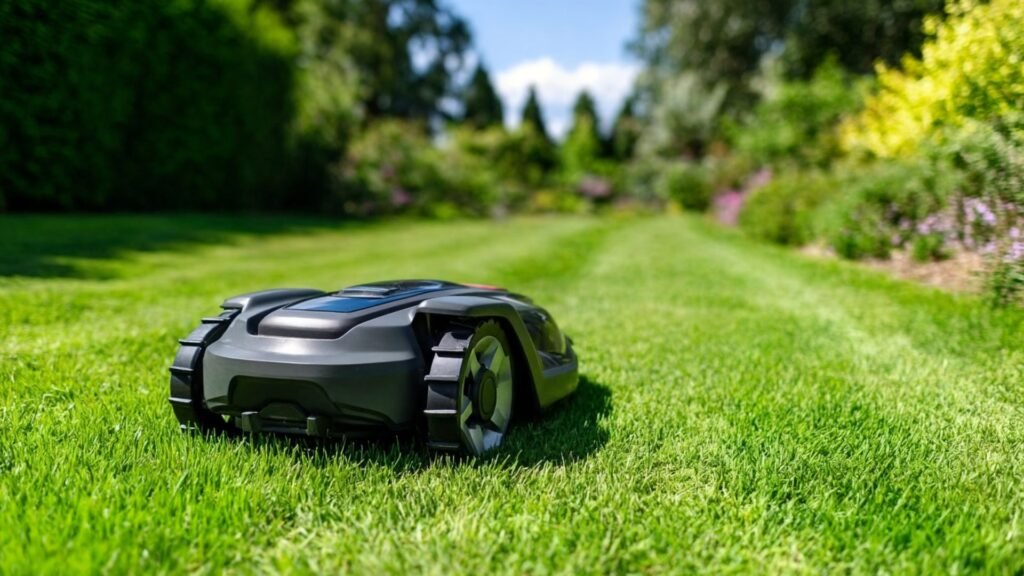
Understanding blade types and their specific purposes helps make the right choice. Robotic lawnmowers commonly use three main types of blades. Traditional mowers come with options like high-lift blades for precise cutting, low-lift blades that work best in sandy regions, and mulching blades that finely chop clippings to enrich your soil. Standard blades serve multiple purposes with side-discharge or bagging functions. We’ll help you select the perfect lawn mower blade type based on your lawn conditions.
Types of Lawn Mower Blades Explained

Knowing which lawn mower blade to use will help you get the perfect cut for your lawn. Each blade type comes with specific design features that match different mowing needs.
High-lift blades
High-lift blades come with a distinct upward curve that creates powerful suction to lift grass before cutting. The design produces strong airflow that makes them great for bagging systems and wet grass. These blades’ aggressive angle boosts air movement to push clippings into collection bags effectively. The increased airflow means they need more engine power than standard models.
Low-lift blades
Low-lift blades feature a subtle curve that produces minimal airflow compared to high-lift models. They work best on sandy or dry ground and handle short, fine grass under 3 inches tall. You’ll notice less strain on your mower since these blades need minimal engine power. They also kick up less dust and debris, making them perfect for dusty areas or properties near roads.
Mulching blades
Mulching blades, also known as 3-in-1 blades, eliminate the need to bag clippings. Their special curved shape includes multiple cutting edges that turn grass into fine pieces. These pieces break down quickly and feed nutrients back into your soil. A mulching deck must be paired with these blades to keep grass circulating and getting cut multiple times before falling.
Standard (2-in-1) blades
Standard blades are the most common type, sometimes called medium-lift or 2-in-1 blades. Their slightly curved edge creates enough airflow to lift grass before cutting it cleanly. These versatile blades handle regular maintenance well on healthy lawns and can both discharge and bag clippings.
Gator (toothed) blades
Gator blades mix mulching and bagging features with serrated edges that look like teeth. The teeth redirect air to cut clippings multiple times, creating finer mulch than regular mulching blades. They excel at fall cleanup and tackle leaves or overgrown grass effectively.
Deck-specific blades
Some mower deck types or brands need their own specialized blades. These blades optimize your mower’s cutting performance and ensure they fit your specific model correctly, which helps prevent damage during use.
How to Choose the Right Blade for Your Mower
Picking the right blade from the many types of lawn mower blades means you just need to think about a few key things. You should first identify which blade designs work with your mower model and match them to your lawn’s needs.
Check the OEM or model number
The best way to find the right blade is to use your mower’s original equipment manufacturer (OEM) number or model number. You’ll find this information on a tag under the deck, near the engine, or under the seat. This number lets you look up compatible blades without any guesswork. Your owner’s manual often has OEM part numbers specific to your mower if you can’t find the model tag. Many manufacturers’ websites also help you find replacement parts by searching your mower model.
Measure blade length and center hole
Accurate measurements become crucial when you can’t find your model information. The right way to measure blade length is to lay the blade flat and measure diagonally from one cutting edge tip to the opposite tip. A straight measurement across gives you the wrong shorter length. The center hole needs checking next—it might be round (measure diameter), star-shaped (count points), H-patterned, or bow-tie designed. Your mower’s spindle must match the center hole perfectly for safe fitting. Remember to note the diameter of any small side holes and how far apart they are.
Match blade type to lawn conditions
Your lawn’s unique needs will point you to the ideal blade choice. Low-lift blades work best in sandy or dusty spots since they kick up less debris. High-lift blades handle tall, thick grass better, while mulching blades suit eco-friendly lawn care. The seasons matter too—gator blades really shine during fall cleanup and leaf management.
Consider mower engine power and deck size
Not all blades work with every mower. Your engine needs more power to spin thicker, heavier blades effectively. Using blades that are too heavy can harm your engine and reduce how well it runs. The deck size also limits your blade options—incorrectly sized blades can damage both your mower and the blade.
Maintaining and Replacing Mower Blades
Your lawn mower blades need proper maintenance to deliver the best mowing results. This applies to all types of lawn mower blades. Good blade care will extend their life and help your lawn stay healthy.
When to sharpen vs. replace
You should sharpen your blades every 20-25 hours to get the best performance. Most homeowners need to do this twice during the season – once in spring and again in midsummer. The blades will need replacement after five to ten sharpening cycles. You’ll need to replace them right away if you see cracks, severe bending, or missing chunks because sharpening won’t fix these structural problems.
How to sharpen blades safely
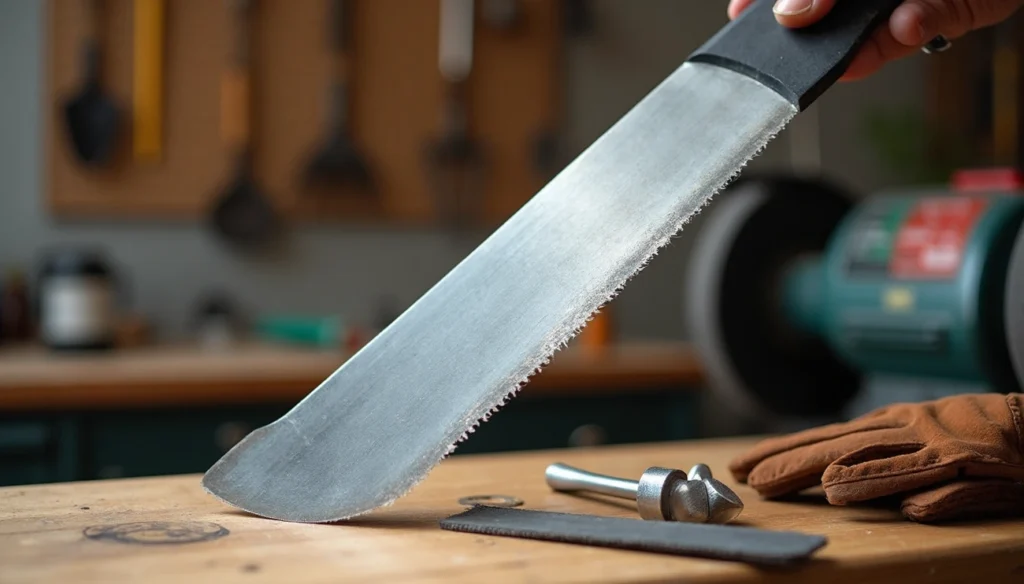
Safety comes first. You must disconnect the spark plug on gas mowers or take out the batteries from electric models. Put on protective gloves and eyewear before you start. Keep the original factory angle (usually 30 degrees) while sharpening. A file, grinder, or specialized sharpener works well – use about 40 strokes on each side. The blade should be as sharp as a butter knife, not razor-sharp. This prevents edge curling from small pebble hits.
Cleaning blades after use
Clean grass clippings and debris off your blades to stop rust and keep them working well. Professional landscapers often use a wire brush or scraper for regular cleaning. Tough buildup might need specialized solvents – some experts say oven cleaner works great for stubborn residue. A light coat of oil or WD-40 will protect against rust.
Signs of blade damage or wear
Watch for torn or ragged grass tips, uneven cutting patterns, and longer mowing times. Look at your blades for nicks, dents, and rounded edges. Your mower might vibrate more than usual if the blade is unbalanced or damaged. Brown grass tips after mowing mean your blade tears the grass instead of cutting it cleanly.
Seasonal maintenance checklist
Start spring with sharp or new blades. Check them monthly during the growing season. Sandy soil or areas with debris need more frequent checks since they wear blades faster. Balance your blades after sharpening to prevent harmful mower vibration. Clean the blades well and add protective coating before winter storage to prevent rust.
Common Mistakes to Avoid When Buying Blades

Many homeowners make mistakes that get pricey when buying replacement blades, despite knowing about different types of lawn mower blades. Your mower will perform at its best throughout the season if you avoid these common pitfalls.
Using the wrong center hole design
Mowers have center hole configurations that vary a lot – circular, star-shaped, H-pattern, Y-pattern, and bow-tie designs. A blade with an incompatible center hole will cause dangerous vibration and poor lawn cutting results. The shape and exact dimensions of your blade’s center hole must match perfectly, because even slight variations can lead to improper installation.
Reusing old screws or fasteners
Your blade’s bolt does more than just attach it – it keeps proper tension against the spindle. This significant connection weakens with worn fasteners. The vibration increases and blade security decreases, which creates safety hazards. New blades should always come with new hardware.
Choosing the wrong blade for the grass type
Grass turns brown and gets diseases when blades tear instead of slicing it cleanly. To name just one example, high-lift blades don’t work well in sandy conditions where low-lift options do better. The right lawn mower blade should match your specific grass and terrain conditions.
Ignoring mower compatibility
Blades must match your mower’s performance capabilities, not just fit physically. Your engine works harder and uses more fuel with blades that are too demanding. Your mower’s manual lists blade specifications because manufacturers know which designs work best for optimal performance.
Conclusion
Your lawn’s health and appearance depend heavily on picking the right lawn mower blade. This piece explores different blade types that serve unique purposes for various mowing conditions. High-lift blades shine with their powerful suction for bagging systems. Low-lift options prove ideal in sandy areas. Mulching blades put valuable nutrients back into your soil, while gator blades tackle tough fall cleanup tasks well.
Picking the right blade means looking at your lawn conditions, mower compatibility, and maintenance needs. You must check measurements and center hole designs to match your mower model perfectly before buying replacements. Regular maintenance is vital for peak performance, whatever blade type you choose.
Most homeowners should sharpen their blades twice per season. Clean cuts from sharp blades put less strain on your mower’s engine. Your blades need balancing after sharpening, and you should replace them after five to ten sharpening cycles or when damage becomes obvious.
A well-chosen blade turns frustrating mowing into quick lawn care. You can now make smart choices about lawn mower blades that will keep your lawn looking its best and extend your equipment’s life. Of course, your grass will reward you with healthy growth and better curb appeal from those clean, precise cuts.