
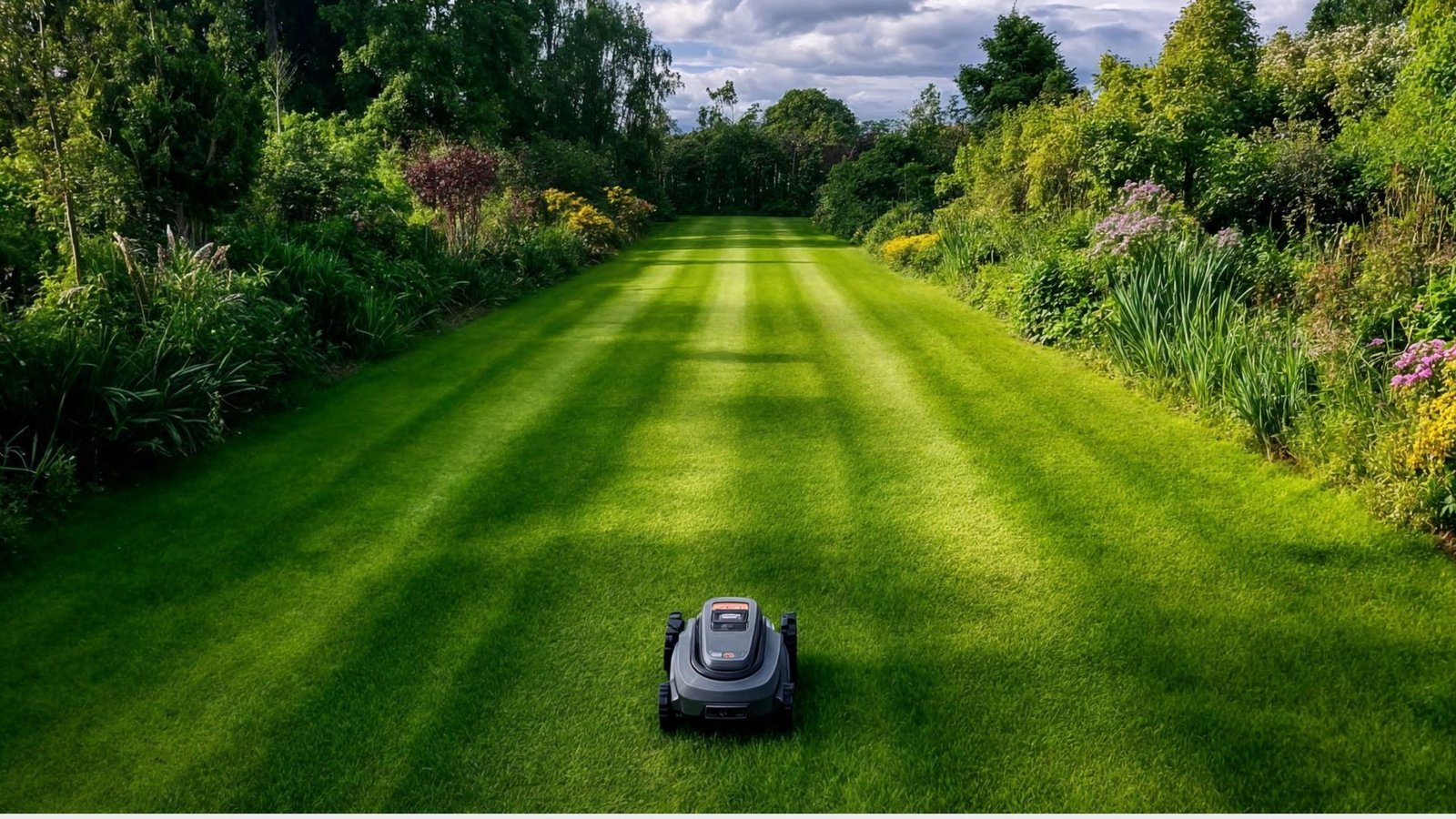
Most lawns need mowing 3 to 7 times weekly during peak growth seasons. Robotic lawn mowers have revolutionized the way homeowners maintain their perfect lawns without constant manual work.
Your Matching Grass Types with the Robotic Lawn type determines how often you need to mow. Cool-season grasses need cutting every 5 to 7 days in spring, and warm-season varieties do best with trimming every 7 to 10 days in summer. The right robotic lawn mower isn’t just about the price – it’s about finding features that match your grass type perfectly. Smart scheduling and height adjustments come standard on many automatic robotic mower models now, but their performance varies with different grass types according to reviews.
Let me show you how to match your specific grass type with the best robotic mower settings. Your yard might have Kentucky Bluegrass that needs mowing every 5 days in spring, or you might own a larger lawn that needs multiple short mowing sessions daily. We’ll create the perfect mowing plan that works for your yard.
Understanding Grass Types and Their Growth Patterns
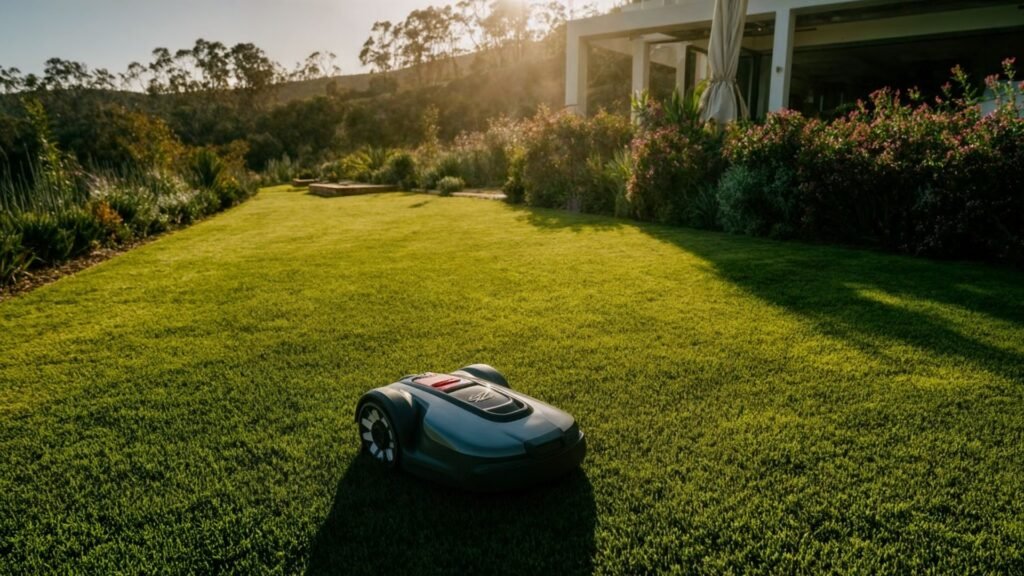
Your robotic lawn mower’s success starts with knowing what’s growing underneath it. Not all grass varieties are the same – each type has its own growth pattern that shapes how you should set up your mowing schedule.
Cool-season vs. warm-season grasses
These two grass types grow differently because of their biological makeup. Cool-season grasses do best in temperatures between 60-75°F. Kentucky Bluegrass, Ryegrass, and Tall Fescue fall into this group. You’ll need to mow them more often during spring and fall since that’s when they grow most actively.
Warm-season grasses like Bermuda, Zoysia, and St. Augustine love temperatures between 80-95°F and grow most during summer. Warm-season grasses turn brown and go dormant when temperatures fall below 65°F. Cool-season grasses stay green even in colder weather.
How the growth rate affects mowing needs
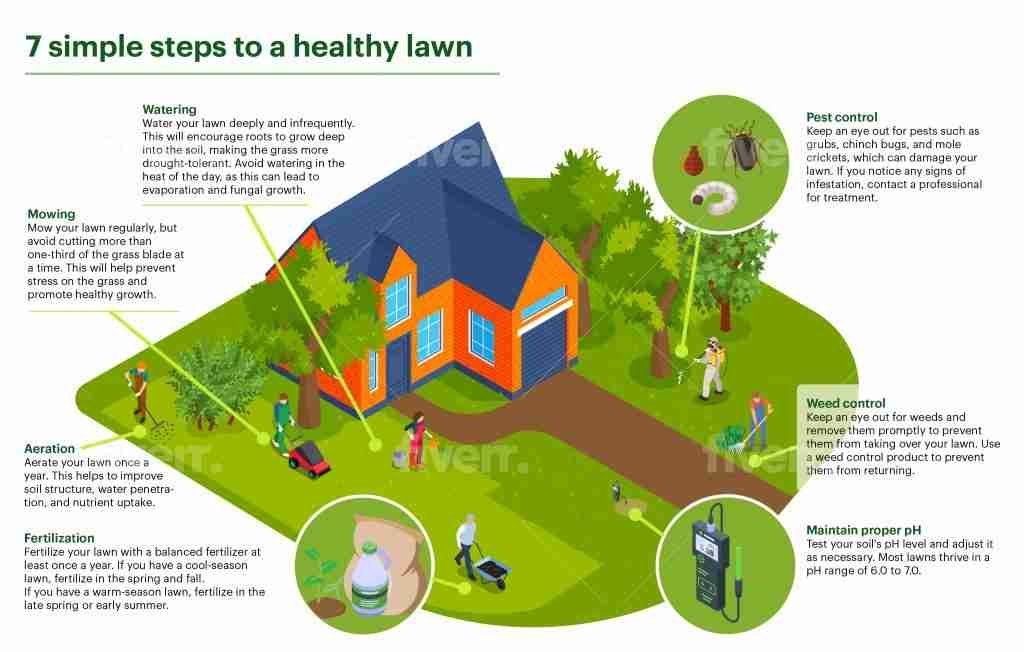
The “One-Third Rule” helps you program your robotic mower the right way – never cut off more than one-third of the grass blade in one go. To name just one example, see a Kentucky Bluegrass lawn that’s 3 inches tall and needs to stay at 2 inches – your robotic mower should trim it before it reaches 3 inches.
Your grass growth speed changes based on:
- What type do you have (Bermuda grows faster than Centipede)
- The season (spring brings growth spurts needing more mowing)
- Your soil’s nutrients (nitrogen matters most)
- Weather changes
The best robotic lawn mowers come with smart scheduling that adjusts to these changes instead of sticking to fixed times.
Common grass types and their ideal heights
Your robotic mower needs the right cutting height to keep your lawn healthy. Here are the recommended heights for common grass types:
| Grass Type | Ideal Mowing Height |
|---|---|
| Kentucky Bluegrass | 2.5-3.5 inches |
| Tall Fescue | 3-4 inches |
| Bermuda Grass | 1-2 inches |
| Zoysia Grass | 1-2 inches |
| St. Augustine | 2.5-4 inches |
| Fine Fescue | <citation index=”27″ link=”https://bioadvanced.com/how-high-mow-your-lawn” similar_text=”Grass Type |
Robotic lawn mower reviews show that models with exact height settings give better results with different grass types. On top of that, when you weigh robotic lawn mower price against performance, premium models often offer more precise height control – something you need to keep your grass healthy all year round.
How Robotic Lawn Mowers Adapt to Different Grass Types
Modern robotic lawn mowers have evolved into something much more than basic automated cutting machines. These smart devices now come with sophisticated systems that handle grass types and growing conditions of all kinds.
Automatic height adjustment features
Today’s robotic mowers adjust their cutting height to meet each grass variety’s needs. Advanced models give you the option to cut between 0.8 inches to 2.4 inches (2 cm to 6 cm). This range works well with everything from low-cut Bermuda grass to taller fescue varieties.
High-end models let you adjust the height through smartphone apps. You won’t need to make manual adjustments anymore. The Husqvarna Automower®’s “TargetHeight” feature gradually lowers cutting height over 10 days. Your lawn won’t experience shock when seasons change or right after installation because of this gradual approach.
Zone-based mowing for mixed grass lawns
Zone-based mowing has become one of the most important advances for homeowners with different types of grass. These robotic lawn mowers can remember up to 100 different mowing areas. This feature becomes essential when Kentucky bluegrass grows in your front yard and Bermuda grass fills your backyard.
These devices create digital maps of your property through mapping technology. Husqvarna X-line models use onboard GPS to build detailed lawn maps. They track mowed areas and spots that still need cutting. The mower’s smart system spots areas where grass grows denser or taller. It switches to “spiral cutting mode” and works on these spots until they match the height of the surrounding areas.
Smart scheduling based on growth rate
These robotic mowers adapt their schedules to match how grass naturally grows. They can mow 3-7 times weekly at the time cool-season grasses grow fastest. The mowers automatically cut less often during slower-growing periods.
The Navimow i Series shows this adaptability through its advanced “multi-zone customization”. Each lawn section gets its own mowing schedule and direction based on grass type and growth speed. The Mammotion LUBA 2 AWD works the same way with zone-specific schedules and heights. If your backyard grass grows faster than the front, the mower adjusts automatically without extra programming.
These adaptive features help robotic lawn mowers maintain healthy turf, whatever the grass variety or season.
Optimizing Robotic Mower Settings for Lawn Health
A robotic lawn mower’s true value depends on how well you set it up. The right setup will extend your mower’s life and help create a healthier, more resilient lawn.
Setting the right mowing frequency
Traditional weekly mowing doesn’t work for robotic mowers. They work best with the “little and often” approach. Mowing 3-4 times weekly creates an ideal baseline for small to medium yards under ½ acre. Larger properties need daily sessions since robotic mowers make light trims instead of heavy cuts.
Each season needs different settings:
- Spring/early summer: Daily mowing during peak growth
- Late summer/fall: 2-3 weekly sessions work best
- Winter: Let the mower rest when the grass goes dormant
Your lawn’s size, growth rate, and desired look should guide your mowing frequency. Daily mowing gives you that perfect, golf-course finish.
Adjusting blade height for each grass type
Robotic mowers come with height settings between 0.8-2.4 inches (2-6 cm). The one-third rule helps protect your lawn – never cut more than one-third of the grass height at once.
New lawns need special care. Many models have a “TargetHeight” feature that slowly lowers cutting height over 10 days. This gentle method helps develop stronger roots and thicker turf.
Using sensors and AI for smarter mowing
Modern robotic lawn mowers pack smart sensors that detect:
- Rainfall and pause when it’s wet
- Growth rates to adjust cutting frequency
- Different zone needs to be customized for cutting heights
Smartphone apps make schedule adjustments simple on advanced models. GPS-assisted navigation covers every spot without going over the same area twice.
Avoiding over-mowing and under-mowing
Your lawn suffers from both too much and too little mowing. Long grass blocks sunlight when you under-mow, creating thatch that chokes the roots. Too much mowing exposes soil, stresses grass, and makes it prone to disease.
Look at your grass clippings to gauge mowing frequency. They should be tiny and hard to spot. Visible, longer clippings mean you need more frequent mowing sessions.
Choosing the Best Robotic Lawn Mower for Your Grass Type

Your perfect robotic lawn mower should match your grass type. This means looking at technical specs and long-term value. The right mower adapts to your lawn’s characteristics naturally.
Key features to look for
The right automatic robotic lawn mower needs these grass-specific features:
- Adjustable cutting heights – Your grass type determines the ideal range (1-2 inches for Bermuda/Zoysia, 2.5-4 inches for tall fescue)
- Battery runtime – The best models run 90+ minutes per charge on larger lawns
- Slope capability – Most models handle 20° inclines, while premium versions tackle up to 35°
- Navigation system – The mower uses GPS, cameras, or boundary wires to adapt to your lawn’s layout
Comparing robotic lawn mower reviews
These factors matter most in robotic lawn mower reviews:
- Results for your grass type
- Weather resistance (IPX rating)
- Noise output (50-70dB is typical)
- App features that customize mowing schedules
- Response to obstacles
Understanding robotic lawn mower price vs. value
Smart robotic lawn mower investments balance initial costs with future benefits:
- Entry-level ($500-$1500): Simple features work for lawns up to 0.75 acres
- Mid-range ($1500-$3500): Advanced features cover up to 2.5 acres
- Premium ($3500+): Smart navigation handles larger areas and complex terrain
Your grass type’s needs should guide your choice more than the price tag alone.
Conclusion
Matching your robotic lawn mower settings with your specific grass type creates the difference between an average yard and a spectacular lawn. In this piece, we’ve explored how cool-season grasses like Kentucky Bluegrass need different heights than warm-season varieties such as Bermuda. Your grass type dictates everything from mowing frequency to ideal cutting height.
State-of-the-art robotic mowers meet these varied needs through adaptive features. Zone-based mowing, smart scheduling, and automatic height adjustments let these devices handle multiple grass varieties on a single property. You can maintain both your Kentucky Bluegrass front yard and Bermuda grass backyard without constant manual intervention.
The “one-third rule” serves as your guide when programming your mower – never cut more than one-third of the grass blade length in a single mowing session. This rule forms the foundation for healthy grass growth, whatever variety you have. On top of that, it works better to use the “little and often” approach with robotic mowers instead of infrequent, heavy cutting.
Your yard’s best robotic lawn mower choice ended up depending on understanding your specific grass needs first. What works perfectly for a Zoysia lawn might be nowhere near as effective for Tall Fescue. While robotic lawn mower prices vary substantially, features that match your grass type will bring the greatest long-term value.
You know to pair your specific grass type with optimal robotic mower settings. This partnership between grass biology and mowing technology rewards you with a consistently beautiful, healthy lawn and saves the countless hours you’d spend pushing a traditional mower around your yard.